By Owen Palmer
Updated November 2026
The buck 102 hunting knife is a fixed-blade field knife built around a 4-inch clip point blade, a full tang and a lightweight handle. It suits hunters who want one dependable knife for field dressing, skinning and general camp chores without paying for a large, heavy blade. It is less suited to buyers who want a large chopper, a folding pocket knife or a knife for heavy bone work. The sections below cover what the listing specifies, how the knife is built, where it has trade-offs, and how it compares to two other Buck hunting models.
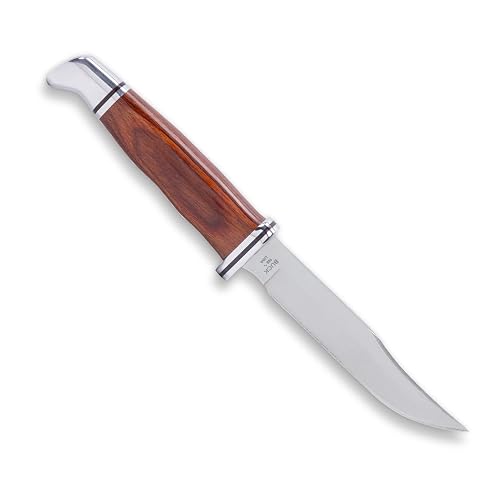
Buck KnivesStrong Full Tang Design, 4" Clip Point 420HC Stainless Steel Blade, Lightweight & Fixed Outdoor Knife Made in the USA 102 Woodsman Hunting Knife with Sheath, DymaLux Handle, 2.6 oz
Product Overview
The Buck 102 Woodsman is one of the most recognizable fixed-blade hunting knives in the Buck lineup. It belongs to the classic “Woodsman” pattern, a knife shape that has been used by hunters and outdoor workers for decades. The model is sold with a sheath and is listed as made in the USA, which is a point many buyers weigh when comparing imported and domestic knives.
The knife is designed as a general-purpose hunting tool rather than a specialty blade. Its 4-inch clip point blade is long enough to handle most field dressing tasks on deer-sized game and short enough to stay controllable in tight work around the abdomen and chest cavity. The overall package weighs about 2.6 ounces according to the listing, which places it in the lightweight category for a full tang fixed blade. That weight matters on long days in the woods, when a heavier knife can become tiring to carry on a belt.
The DymaLux handle is the other defining element. DymaLux is a laminated wood-based material that Buck uses on several models. Owners generally describe it as more comfortable and less slippery than bare wood, though it is not as grippy as rubberized or textured polymer. The handle is one reason the knife stays comfortable through extended use, but buyers who work with wet hands or blood-heavy game should keep grip security in mind.
Key Features & Specifications
The table below lists the specifications stated in the product listing. Where the listing does not give a figure, it is left out rather than estimated.
| Feature | Specification |
|---|---|
| Model | Buck 102 Woodsman |
| Blade length | 4 inches |
| Blade shape | Clip point |
| Blade steel | 420HC stainless steel |
| Construction | Fixed blade, full tang |
| Handle material | DymaLux |
| Included accessory | Sheath |
| Weight | 2.6 oz |
| Country of manufacture | USA |
Two of these specifications deserve a closer look. The first is the 420HC steel. Buck uses 420HC on a wide range of its hunting knives. It is a stainless steel that trades some edge retention for ease of sharpening and corrosion resistance. In practical terms, owners often report that it takes an edge quickly on a stone or ceramic rod and holds up well enough for field dressing a few animals before needing a touch-up. It is not a premium powder steel, so it will need more frequent honing than a high-end knife in tougher steels.
The second is the full tang design. A full tang means the steel runs the full length of the handle, which generally improves strength and balance compared with a partial or stick tang. The listing highlights this as a “strong full tang design,” which fits the knife’s intended use for field work that involves some prying and pressure against bone.
Pros & Cons
Pros
- Full tang construction gives a solid, balanced feel for a knife of this size.
- The 4-inch clip point is a practical length for field dressing and skinning.
- Light at about 2.6 ounces, so it is easy to carry all day on a belt.
- 420HC stainless steel is easy to sharpen and resists rust in normal hunting conditions.
- DymaLux handle is comfortable and holds up better than many plain wood handles.
- Made in the USA, which matters to buyers who prefer domestic manufacturing.
- Includes a sheath, so it is ready to carry without an extra purchase.
Cons
- 420HC steel does not hold an edge as long as premium powder steels, so regular honing is necessary.
- The blade length is short for buyers who want a larger knife for heavy chopping or big game work.
- Wood-based handles can become slick when wet or covered in blood, which affects grip security.
- Not a folding knife, so it is less convenient for pocket carry compared with a lockback.
- Owners who prefer thicker, heavier knives may find the weight too light for their tasks.
Performance Analysis
Performance for a fixed-blade hunting knife comes down to four things: how the edge cuts, how well the blade holds up under pressure, how the handle controls the knife in use, and how easy it is to maintain. The following analysis is based on the listed specifications and on patterns that appear in owner feedback. It is not based on any personal testing.
Cutting and edge retention. A 4-inch clip point with a relatively thin grind is well suited to the detailed work of skinning and field dressing. The clip point tip allows controlled cuts near the hide, and owners commonly describe the blade as easy to guide. The trade-off is edge life. Owners typically report that the 420HC edge needs touching up with a few strokes on a fine stone after a heavy session. This is normal for a stainless steel of this class, and most hunters who maintain their knives between seasons will not find it a problem.
Strength and build. The full tang and fixed blade design make the Woodsman stronger than many folding knives of similar size. Owners generally report that the knife handles prying, light batoning of small wood and the usual pressure of working around joints without concern. It is not designed for chopping frozen wood or prying apart heavy bone, and a knife built for those jobs would be heavier and thicker.
Handle and control. The DymaLux handle gives a comfortable, solid grip in dry conditions. Owners often note that the handle profile suits a relaxed hand position during long cuts. The weak point is wet or bloody conditions. Like most wood-based handles, grip can decrease when the surface is slick. Many hunters address this with a lanyard, a wrap of paracord or by keeping a shop towel handy during field dressing.
Maintenance. The stainless blade is easy to clean and resists the staining that affects some carbon steel knives. The main maintenance item is keeping the edge sharp. A simple routine of a few strokes on a fine stone after each use keeps the blade in good shape. The sheath should be checked periodically to make sure it still holds the blade securely.
Who Should Buy This Product?
The Buck 102 is a strong fit for hunters who want a dependable, mid-sized fixed blade for deer and other medium game. It works well for a first serious hunting knife, a backup knife in a truck or pack, and for hunters who prefer carrying one knife for all field tasks rather than a set. Buyers who value American manufacturing and a traditional knife pattern will likely be satisfied.
It is a weaker choice for hunters who regularly process large animals and want a longer, heavier blade, or for anyone who wants a folding knife for pocket carry. Buyers who need the longest possible edge retention without frequent sharpening may also want to look at a knife with a higher-end steel. If grip security in wet conditions is a major concern, consider a knife with a textured polymer or rubber handle instead.
Buying Guide
Before buying any hunting knife, it helps to decide on the main job. A knife for field dressing small game is different from one for processing elk, and a knife for camp chores has different needs again. The points below will help you compare the Buck 102 with other options.
- Blade length. For most deer-sized game, a blade between 3 and 4.5 inches covers field dressing and skinning. Longer blades suit heavy work but can feel awkward for detailed cuts.
- Blade shape. Clip point blades offer a fine tip for controlled cuts near the hide. Drop point blades are sturdier at the tip and better for general-purpose work. Choose based on the tasks you do most.
- Steel type. Stainless steels like 420HC are easy to maintain and resist rust. Higher-end steels hold an edge longer but need more care and cost more. Decide how often you want to sharpen.
- Handle material. Wood and laminated handles are comfortable in dry conditions. Rubber or textured polymer handles offer better grip when wet or bloody.
- Construction. Full tang designs are generally stronger and more balanced. Check the listing to confirm.
- Sheath. A good sheath should hold the knife securely and allow smooth one-handed drawing. Confirm whether one is included.
Several well-known alternatives are worth comparing. The Buck 110 Folding Hunter is a lockback folding knife with a 3-3/4 inch clip point blade and an ebony handle with brass bolsters. It suits buyers who want a pocket-carry knife with a similar blade profile. The Buck 110 is listed with a sheath and is also made in the USA.

Buck Knives3-3/4" Clip Point 420HC Steel Blade, Lockback Design, Ebony Handle with Brass Bolsters, Hunting Knife Made in the USA 110 Folding Hunter Knife with Sheath, Ebony & Brass, 7.2 oz
The Buck 191 Zipper is a fixed-blade knife with a 4-1/4 inch drop point Guthook blade and a wooden handle. The drop point and hook profile suit skinning and detailed cutting, and the Zipper is a good option for buyers who want a fixed blade with a slightly different shape from the Woodsman.
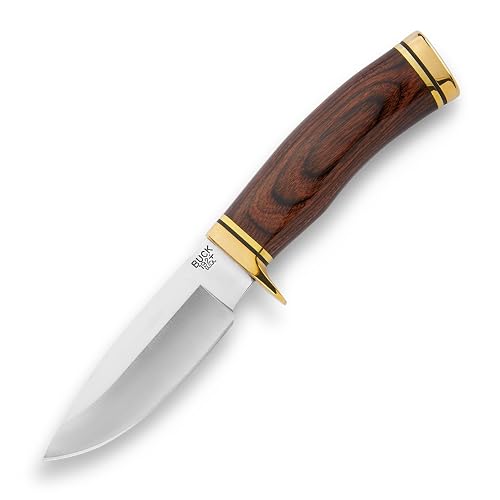
Buck Knives4-1/4" Drop Point Guthook 420HC Stainless Steel Blade, Wooden Handle, Fixed Outdoor Knife Made in the USA 191 Buck Zipper Hunting Knife with Sheath, 6.3 oz
Buyers who want to read more about knife types before deciding can start with What Is a Fixed Blade Hunting Knife? Uses, Parts and How to Choose and What Is Considered a Hunting Knife? Fixed Blade vs Folding Knife (2026). For maintenance advice, What Angle to Sharpen Hunting Knife: 20 Degrees Per Side for Field Edges (2026) covers the sharpening angle most hunters use for field edges. Those comparing skinning-focused options may also find Skinning Knife for Hunting: How to Choose and Use One (7 Steps) useful.
FAQ
Is the Buck 102 a good first hunting knife?
For many hunters it is a sensible first choice. The 4-inch clip point, full tang construction and light weight suit the most common field tasks for deer-sized game. Beginners should plan to learn basic sharpening, since the 420HC edge will need regular maintenance.
Is the Buck 102 made in the USA?
The product listing identifies the Buck 102 as made in the USA. Buyers who care about domestic manufacturing should confirm the current country of origin on the listing before purchase.
What blade steel does the Buck 102 use?
The listing specifies 420HC stainless steel. It is known for ease of sharpening and corrosion resistance, though it does not hold an edge as long as premium powder steels.
Does the Buck 102 include a sheath?
Yes. The product listing states that the knife comes with a sheath, so it can be carried on a belt without buying a separate case.
Is the Buck 102 big enough for elk?
A 4-inch blade is workable for field dressing larger game, but many hunters prefer a longer blade for heavy processing. If you expect to work on elk or other large animals regularly, consider comparing with a longer fixed blade.
How much does the DymaLux handle help with grip?
DymaLux is comfortable in dry conditions and holds up better than plain wood. Owners often note that grip can decrease when the handle is wet or bloody, so keeping a towel or adding a lanyard is a practical precaution.
How should I maintain the Buck 102 blade?
Clean and dry the blade after each use, and touch up the edge with a fine stone as needed. Check the sheath periodically to make sure it still holds the knife securely.
Related reading
About Owen Palmer
Owen Palmer is part of our editorial team and reviews and edits our hunting guides, checking product details against manufacturer specifications and owner feedback.