By Owen Palmer
Updated November 2026
A trailing point hunting knife is a fixed blade where the spine curves down toward the tip, giving you a thin, controllable edge for skinning, field dressing and general camp chores. The Cold Steel Roach Belly is one of the better-known versions of this design, built around a 4.5-inch German 4116 stainless steel blade and a high impact polypropylene handle. This review is for hunters who want a single, straightforward fixed blade for field work and who are comfortable with a simple, no-frills knife. It is less suited to buyers who want a premium steel, a detailed hand-finished handle, or a large skinning blade for big game.

Cold Steel Roach Belly 4.5" German 4116 Stainless Steel Fixed Blade Trailing Point Outdoor Hunting Utility Knife, 4" High Impact Polypropylene Handle, Durable Sheath Included
Product Overview
The Cold Steel Roach Belly belongs to a family of utility-style fixed blades that Cold Steel has offered for years. Its name refers to the belly-shaped curve of the edge, which runs from the handle to a trailing point that sweeps upward and back toward the spine. That profile is the defining feature of a trailing point knife: the tip sits low and the cutting edge is long and gently arched, which tends to suit slicing and controlled cuts more than stabbing.
The blade is made from German 4116 stainless steel. This is a chromium-molybdenum-vanadium stainless, commonly used in mid-range knives because it balances corrosion resistance with a reasonable edge. The handle is high impact polypropylene, a tough plastic that resists cracking and does not absorb water. The listing also includes a durable sheath, which matters for a field knife that will spend a lot of time on a belt or pack.
Overall, the knife is positioned as a working tool rather than a display piece. Owners generally treat it as something to carry on a hunt, use hard, clean and put back in the sheath. If you want to understand where this type of knife fits among other fixed blades, the article What Is a Fixed Blade Hunting Knife? Uses, Parts and How to Choose walks through the basic anatomy and common uses.
Key Features & Specifications
The table below lists the specifications that the product name and the manufacturer’s standard description support. Measurements not clearly stated in the listing are left out rather than estimated.
| Feature | Specification |
|---|---|
| Knife type | Fixed blade |
| Blade profile | Trailing point (belly style) |
| Blade steel | German 4116 stainless steel |
| Blade length | 4.5 inches |
| Handle material | High impact polypropylene |
| Handle length | 4 inches |
| Sheath | Durable sheath included |
| Intended use | Hunting, outdoor utility, field dressing |
A 4.5-inch blade is a useful length for most small and medium game, for field dressing deer when you do not need a long skinning blade, and for general camp tasks like cutting rope or food. Polypropylene handles are light and grip acceptably when wet, though they lack the texture or warmth of wood or micarta. Manufacturers specify the 4116 steel for stain resistance, which is practical if you are working with blood and moisture.
Pros & Cons
Pros
- The trailing point profile gives a long, controllable cutting edge that suits skinning and slicing.
- German 4116 stainless steel resists rust and is easy to maintain for most field users.
- The polypropylene handle is durable, light and not affected by moisture.
- The 4.5-inch blade is a practical size for a wide range of hunting and camp tasks.
- A sheath is included, so the knife can be carried right away.
Cons
- Polypropylene handles feel less refined than wood, micarta or G10 and may be slippery for some hands.
- The 4116 steel is a mid-range choice and will not hold a fine edge as long as premium stainless steels.
- The 4-inch handle suits average to medium hand sizes better than very large hands.
- Owners who want a large skinning blade for big game may find the 4.5-inch length limiting.
Performance Analysis
Because this review is based on the published specifications and on patterns that owners commonly report, it is best to think about performance in terms of what each component is designed to do. The trailing point blade offers a long, arched edge, which lets you make smooth passes without dragging the tip through the hide. In practice, many users find this profile easy to control when opening the belly of an animal, provided they keep the edge sharp and the cuts shallow.
The 4116 steel is a reasonable match for field conditions. It is not the hardest or most wear-resistant steel available, so owners often mention needing to touch up the edge more often than they would with a higher-end blade. On the plus side, the steel is usually described as forgiving to sharpen on common stones, and it resists the rust that can creep in after a wet hunt. A simple routine of wiping the blade dry and oiling it lightly after use goes a long way.
The polypropylene handle is where owner feedback tends to be most mixed. It is light, does not crack in cold weather and handles moisture without trouble. However, it can feel smooth when hands are bloody or sweaty. Adding a texture wrap or choosing a sheath that keeps the knife secure can improve control. Anyone planning to rely on this knife for long, repetitive work should test grip comfort with gloves on before the season starts.
For a broader look at how edge geometry affects cutting, the article What Angle to Sharpen Hunting Knife: 20 Degrees Per Side for Field Edges (2026) explains why angle and maintenance matter as much as steel choice.
Who Should Buy This Product?
This knife is a good fit for hunters who want a dependable, low-maintenance fixed blade for field dressing and camp use, and for anyone who prefers a trailing point profile for controlled cuts. It also makes sense as a first serious hunting knife or as a backup to a larger skinning knife.
You should probably skip this one if you want a premium handle material, a very large blade for big game processing, or a knife with a long track record of holding an edge under heavy daily use. In those cases, a higher-grade steel or a different blade shape will serve you better.
Buying Guide
When choosing a trailing point hunting knife, start with the job you need it to do. For small game, a 3 to 4 inch blade is often enough. For deer-sized animals, most hunters prefer a blade in the 4 to 5 inch range that is comfortable to control. Check that the handle fits your hand with gloves on, since a knife that feels fine in the shop can feel awkward in cold weather.
Steel is the next consideration. Stainless steels such as 4116 are a practical choice for wet conditions, and they are easier to maintain than high-carbon steels. Higher-end stainless steels can hold an edge longer but may take more effort to sharpen. Look for a sheath that holds the knife securely and includes a belt loop or attachment that suits how you carry it. Finally, decide whether you need a knife that does double duty as a utility tool; many hunters find a fixed blade in this size works well for rope, food and light camp chores as well.
If you want to compare options, consider these well-known alternatives:
The Old Timer Sharpfinger is a popular fixed blade with a clip point skinner blade and a leather belt sheath, and many hunters like its versatility for skinning and general camp work.
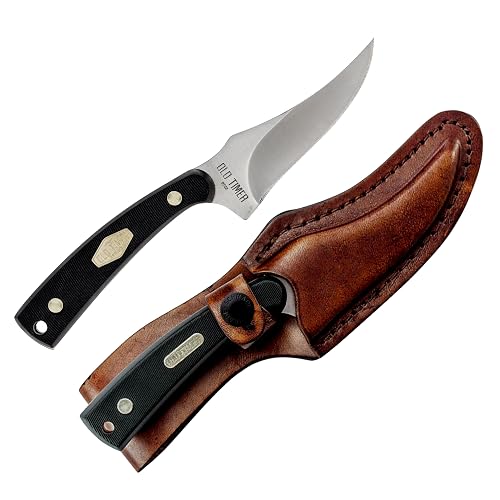
Old Timer 152OT Sharpfinger 7.1in S.S. Full Tang Fixed Blade Knife with 3.3in Clip Point Skinner Blade, Black Sawcut Handle, and Leather Belt Sheath for Hunting, Camping, Skinning, EDC, and Outdoors
The Purple Dragon hunting knife, a trailing point boning-style knife forged from D2 steel with a full tang G10 handle, offers a different steel and handle combination. Owners who prioritize edge retention and a more refined grip often look at knives like this one.
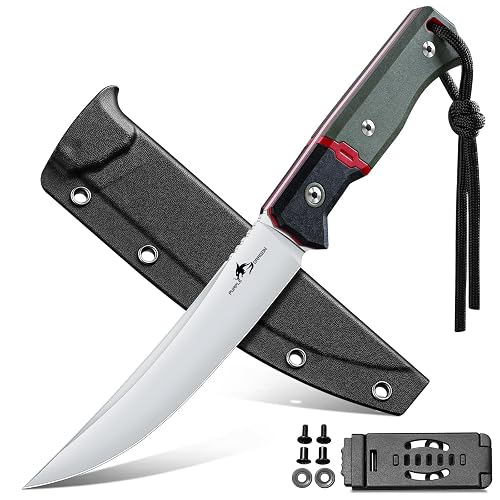
Forged from a Single Piece of D2 Steel, Full Tang G10 Handle, Detachable Belt-Loop, Gift Box Purple Dragon Hunting Knife for Boning – Trailing Point Boning Knife Green
For a closer look at other trailing point and utility options, the article Skinning Knife for Hunting: How to Choose and Use One (7 Steps) covers what to check before buying a dedicated skinning blade.
FAQ
Is a trailing point knife good for skinning?
Many hunters find the trailing point profile useful for skinning because the long, arched edge allows smooth, shallow cuts. A sharp edge matters more than the profile itself, and you should always keep the blade clean and cut away from the body.
Is German 4116 steel good for a hunting knife?
German 4116 is a mid-range stainless steel that resists rust well and is easy to sharpen. It is a practical choice for field use, though it will not hold an edge as long as premium steels under heavy use.
Does the polypropylene handle hold up in wet conditions?
Polypropylene does not absorb water and is generally unaffected by moisture, which is one reason it is common on utility knives. The main concern is grip, since the surface can feel slick when wet or bloody.
Is a 4.5-inch blade long enough for deer?
A 4.5-inch blade is workable for field dressing and many skinning tasks on deer, but some hunters prefer a longer skinning blade for larger animals. It comes down to personal preference and how you process your game.
How should I care for a stainless fixed blade?
Rinse the blade after use, dry it thoroughly and apply a light coat of oil. Sharpen with a stone at a consistent angle, and store the knife in its sheath only after it is fully dry.
Should I replace the sheath?
The included sheath is usually adequate for light to moderate use. Some hunters upgrade to a leather or kydex sheath with better retention, especially if they carry the knife on a belt during long walks.
Is this knife suitable as a first hunting knife?
Yes, for many hunters it is a reasonable starting point. Its size and simple construction make it easy to learn with, and it works well as a utility knife around camp.
Related reading
- Where Is the Long Dark Hunting Knife Location? Finding It Fast
- Where Can I Buy a Hunting Knife Online in Australia? 5 Tips
About Owen Palmer
Owen Palmer is part of our editorial team and reviews and edits our hunting guides, checking product details against manufacturer specifications and owner feedback.