Quick answer
Our overall pick is the Peterson Field Guide To Mammals Of North America for its full-color illustrations and trusted sponsorship. Other picks are excellent for specific needs like tracking, freshwater fishing, or exploring urban and regional wildlife.
For anglers and outdoor enthusiasts, a good field guide is as essential as a reliable rod or a sturdy pair of boots. Whether you’re identifying a bird near your fishing spot, understanding the habitat of local mammals, or learning about the plants around you, the right book deepens your connection to the outdoors. We compared manufacturer listings and specifications to bring you this roundup of the best field guide books for your pack.
Quick picks
- Overall Mammal Guide: Peterson Field Guide to Mammals (see on Amazon)
- For Animal Tracking: Peterson Field Guide to Animal Tracks (see on Amazon)
- For Freshwater Fish: Peterson Field Guide to Freshwater Fishes (see on Amazon)
- Compact Insect Guide: Nat Geo Pocket Guide to Insects (see on Amazon)
9 Best Field Guide Books compared
| # | Product | Best for | Weight | Dimensions (H x L) | Primary Focus |
|---|---|---|---|---|---|
| 1 | NWF Field Guide to Insects and Spiders | Best for entomology | 1.70 lbs | 7.7″ x 4.7″ | Insects & spiders of North America |
| 2 | Peterson Field Guide to Mammals | Best overall mammal guide | 1.45 lbs | 7.25″ x 4.5″ | Mammals of North America |
| 3 | Peterson Field Guide to Freshwater Fishes | Best for freshwater anglers | 1.70 lbs | 7.0″ x 4.5″ | Freshwater fishes of North America |
| 4 | The Wildlife of Costa Rica | Best for tropical biodiversity | 1.05 lbs | 8.5″ x 5.5″ | Costa Rican wildlife |
| 5 | Wildlife of the Pacific Northwest | Best for Pacific Northwest tracking | 0.85 lbs | 8.45″ x 6.0″ | Pacific Northwest wildlife & tracking |
| 6 | Peterson Field Guide to Animal Tracks | Best for track identification | 1.30 lbs | 7.25″ x 4.5″ | Animal tracks |
| 7 | Peterson First Guide to Urban Wildlife | Best beginner urban guide | 0.25 lbs | 7.25″ x 3.75″ | Urban wildlife for beginners |
| 8 | Peterson Field Guide to Medicinal Plants | Best for foraging and plant lore | 1.30 lbs | 7.25″ x 4.25″ | Medicinal plants of E. & C. North America |
| 9 | Nat Geo Pocket Guide to Insects | Best pocket insect guide | 0.50 lbs | 7.24″ x 4.29″ | Insects of North America |
How we chose
We compared manufacturer listings and specifications on Amazon as of October 2026. We did not test, use, or review these products hands-on. Our selections are based on comparing stated features, dimensions, weight, publication focus, and the reputations of the guide series and sponsoring organizations.
Best for North American Wildlife
These comprehensive guides cover broad categories of fauna found across the continent.
1. Best for entomology: NWF Field Guide to Insects and Spiders

Pros
- Comprehensive focus on insects and spiders.
- Backed by the National Wildlife Federation.
Cons
- The listing only mentions it as a used copy.
- One of the heavier guides in our list.
Published by the National Wildlife Federation, this guide covers insects, spiders, and related species across North America. The listing notes it is a used book in good condition. It measures 7.7 by 4.7 inches and is one of the heavier guides in our list at nearly 1.7 pounds.
Best for: Anyone wanting to identify the countless insects and arachnids encountered outdoors.
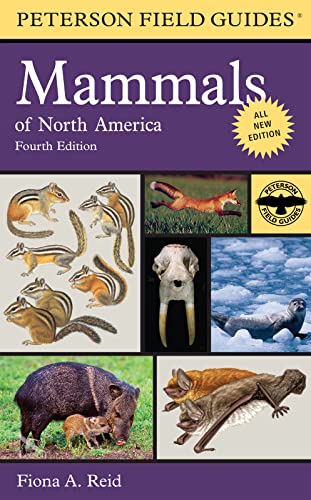
2. Best overall mammal guide: Peterson Field Guide to Mammals
Pros
- Features full-color illustrations.
- Sponsored by major conservation organizations.
- Standard Peterson field guide size.
Cons
- The listing does not mention if it's a new or used copy.
Our overall pick, this fourth edition Peterson guide to North American mammals features full-color illustrations and is sponsored by the National Audubon Society, the National Wildlife Federation, and the Roger Tory Peterson Institute. It’s a softcover measuring 7.25 by 4.5 inches.
Best for: The foundational mammal reference for any North American outdoor enthusiast’s library.
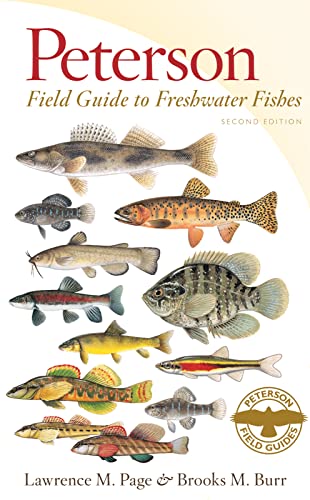
3. Best for freshwater anglers: Peterson Field Guide to Freshwater Fishes
Pros
- Essential focus for freshwater fishing.
- Part of the trusted Peterson field guide series.
Cons
- The listing provides very few descriptive features.
- One of the heavier guides in our list.
This second edition Peterson guide is dedicated to freshwater fishes. The listing description simply states ‘FIELD GUIDE TO FRESHWATER FISH.’ It measures 7 by 4.5 inches and weighs about 1.7 pounds, offering anglers a targeted resource for fish identification beyond catch-and-release practices.
Best for: Anglers who want to reliably identify freshwater fish species across North America.
Best for Regional & Specialized Topics
These guides focus on specific geographic areas or unique outdoor skills.
4. Best for tropical biodiversity: The Wildlife of Costa Rica

Pros
- Focuses on a single, wildlife-rich country.
- Portable size and weight for travel.
Cons
- The listing only mentions it as a used copy.
- Specific to Costa Rica, not North America.
This field guide focuses on the rich wildlife of Costa Rica. The listing notes it is a used book in good condition. Its dimensions are 8.5 by 5.5 inches, and it weighs just over one pound, making it a portable reference for a specific, biodiverse region.
Best for: Travelers and anglers planning a trip to explore Central American ecosystems.
5. Best for Pacific Northwest tracking: Wildlife of the Pacific Northwest

Pros
- Comprehensive regional focus includes tracking.
- Lightweight for its larger page size.
Cons
- The listing only mentions it as a used copy.
- Specific to the Pacific Northwest region.
This Timber Press field guide is dedicated to tracking and identifying mammals, birds, reptiles, amphibians, and invertebrates in the Pacific Northwest. The listing notes it is a used book in good condition. It’s relatively light at under 0.85 pounds and measures 8.45 by 6 inches.
Best for: Anglers and hikers in Washington, Oregon, and British Columbia who want a regional tracking guide.
6. Best for track identification: Peterson Field Guide to Animal Tracks

Pros
- Specialized focus on animal tracks.
- Standard, portable field guide size.
Cons
- The listing only mentions it as a used copy.
- Focus is narrow to tracks only.
This third edition Peterson guide is dedicated solely to animal tracks. The listing notes it is a used book in good condition. It shares the classic Peterson dimensions of 7.25 by 4.5 inches and weighs about 1.3 pounds, making it a specialized companion for reading landscape signs.
Best for: Developing the skill of identifying animals by their tracks and signs. Learn more in our article on <a href=”/identify-animal-tracks-field-guide/”>how to identify common animal tracks</a>.
7. Best beginner urban guide: Peterson First Guide to Urban Wildlife

Pros
- Very lightweight and compact.
- Beginner-friendly 'First Guide' format.
- Focus on commonly seen urban species.
Cons
- The listing title/description is minimal.
- A more basic guide than the full Peterson series.
This Peterson First Guide is designed for beginners and focuses on animals and plants most likely seen in urban settings. It is exceptionally compact and light, measuring 7.25 by 3.75 inches and weighing only about a quarter of a pound, making it an easy addition to any daypack.
Best for: Beginners or city dwellers wanting to start identifying common local wildlife.
8. Best for foraging and plant lore: Peterson Field Guide to Medicinal Plants

Pros
- Unique focus on medicinal plants and herbs.
- Standard, portable field guide size.
Cons
- Requires expert knowledge for safe use.
- Geographically focused on Eastern and Central North America.
This third edition Peterson guide covers medicinal plants and herbs of Eastern and Central North America, described as a guide to discovering nature’s remedies. It measures 7.25 by 4.25 inches and weighs about 1.3 pounds. This is a specialized guide for a specific and important outdoor skill.
Best for: Those interested in the traditional uses and identification of wild plants. Always follow the manufacturer’s manual and expert guidance for safety.</p>
Best for Lightweight Packing
These are the most compact and lightweight guides in our selection.
9. Best pocket insect guide: Nat Geo Pocket Guide to Insects

Pros
- The most compact and lightweight guide in our list.
- Pocket-sized format from National Geographic.
Cons
- The listing does not mention illustration quality or detail level.
- Pocket size may mean less comprehensive coverage.
This National Geographic pocket guide focuses on insects of North America. It is the most compact guide in our list, measuring about 7.24 by 4.29 inches and is very thin at 0.43 inches wide. It’s also very light at half a pound, designed for true pocket carry.
Best for: Anyone who wants a truly pocket-sized, no-fuss guide to common insects.
How to choose the best field guide books
Choosing the right field guide depends on what you want to identify and where you’ll be carrying it. First, match the guide’s geographic and subject focus to your primary interest. A general mammal guide is versatile, while a regional guide like one for the Pacific Northwest or a specific topic like fish or tracks will offer deeper detail for that niche. Understanding wildlife habitats can also help you select a guide relevant to your favorite fishing or hiking areas.
Next, consider portability. Weight and dimensions matter if you’re adding it to a already full pack. A full-size Peterson guide is a standard, but a ‘Pocket’ or ‘First Guide’ can be ideal for quick reference with minimal bulk. Finally, look at the guide’s features. While we couldn’t assess image quality hands-on, listings that mention full-color illustrations or respected sponsors (like the National Audubon Society) often indicate a visually helpful and authoritative resource.
What to look for
- Focus & Region: Ensure the book covers the wildlife and geographic area you’ll be exploring.
- Size & Weight: A compact, light guide is more likely to make it into your pack on every trip.
- Reputable Series: Established series like Peterson, National Geographic, or guides from conservation organizations often provide reliable, well-organized information.
FAQ
Why are some of these guides listed as ‘used’?
The Amazon listing data we compared often showed these books as ‘Used Book in Good Condition.’ This is a common way to find older editions or more copies of field guides, which are often updated every decade or so. The information in a slightly older edition is usually still highly valuable for identification.
Can I use a field guide for wildlife observation ethically?
Absolutely. A field guide enhances observation by helping you identify species from a distance, which is a cornerstone of ethical wildlife watching. For responsible practices, always follow wildlife observation ethics and the NPS principles for watching wildlife.
Should I get a general guide or a specialized one?
It depends on your goals. A general mammal or bird guide is an excellent starting point for any outdoor enthusiast. If you have a specific passion—like fishing, tracking, or foraging—a specialized guide will provide much more detailed information. Many people eventually build a small library with one general and several specialized guides.
How do I use a field guide while fishing?
Keep it in a dry bag or waterproof case. Use it to identify waterfowl, riparian mammals, or the fish you catch (for proper identification before release). Understanding the broader ecosystem, including seasonal wildlife behavior, can also make you a more aware and successful angler.
References
- Amazon product listings and manufacturer specifications (accessed October 2026)
- National Park Service. Watching Wildlife. https://www.nps.gov/subjects/watchingwildlife/index.htm