By Owen Palmer
Updated November 2026
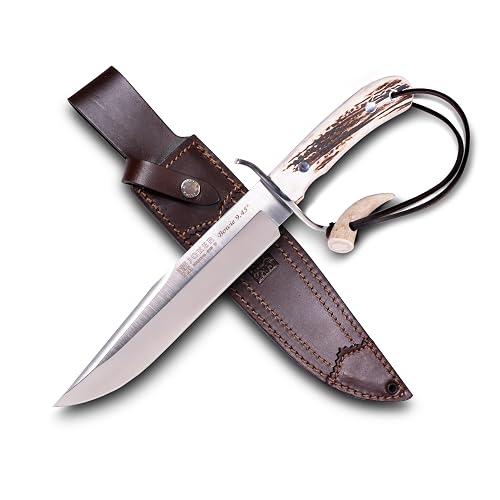
Types of hunting knife blades differ mainly in tip shape, edge profile, and steel grind, and each shape is built for a specific job. In this guide you will learn how to identify the common blade shapes, match them to the game you hunt and the tasks you perform, and spot the features that matter most when you compare knives. By the end you should be able to narrow your choices to one or two blades that fit your hunting style.
Start With the Tip: The Four Main Blade Shapes
Most hunting knives fall into one of four tip categories. The tip determines how the blade penetrates, how much control you have at the point, and how safely the knife can be used around internal organs. Before you think about steel or handle material, look at the tip.
Drop Point
A drop point blade has a spine that curves gently down toward the tip, creating a strong, thick point that sits roughly on the blade’s centerline. This is the most widely used hunting blade shape. The tip is sturdy enough for heavy work like cutting through hide and light bone, and the belly of the blade gives you a long, smooth working edge for skinning and field dressing. Many hunters consider the drop point the best all-around choice for big game.
Clip Point
A clip point features a spine that flattens or dips to form a concave section near the tip, producing a sharp, fine point. The thin tip is useful for detail work such as cutting around joints, opening tough hide, and making precise incisions. The tradeoff is that the thinner point is less durable under hard prying, and the sharp tip requires more care when you are working near the abdomen to avoid puncturing organs.
Trailing Point
A trailing point, sometimes called a sheepsfoot-style or upswept tip depending on the maker, has a spine that rises toward the tip and an edge that curves upward to meet it. The result is a blade where the cutting edge is stronger and the tip is positioned higher above the working surface. Trailing point blades are often used for gutting because the upturned tip reduces the risk of puncturing internal organs. Hunters who field dress animals frequently appreciate this design.
Spear Point
A spear point is symmetrical, with both the spine and the edge meeting at a centered tip. It is a versatile and balanced shape, but it has a thinner, more fragile tip than the drop point and can be less comfortable for controlled cutting in close quarters. Spear point blades are common on general-purpose knives and on some dedicated hunting models that prioritize penetration.
Match the Blade Shape to Your Game and Tasks
No single blade shape is ideal for every animal or every step of processing. A practical approach is to think about what you do most often in the field, then choose the shape that handles that work with the least risk and effort.
- Large game such as deer, elk and hogs: A drop point or trailing point handles hide, cartilage and muscle well. The thicker tip resists breakage when you are working through tough tissue.
- Small game and upland birds: A clip point or a smaller drop point gives you the precision needed for quick, clean cuts on rabbits, squirrels and birds.
- Field dressing and gutting: A trailing point or a blade with a gut hook reduces the chance of cutting into the stomach or intestines.
- Heavy processing and camp work: A thicker, straight-spine drop point stands up to repeated cutting and occasional batoning.
Edge Profile: Plain, Serrated and Combination Edges
The edge is the other half of the blade’s character. Plain edges are the standard choice for skinning and butchering because they slice smoothly and are easy to sharpen in the field. Serrated edges grip fibrous material, cut through tendons and rope more quickly, and remain effective when partially dull, but they are harder to sharpen and can leave a rougher cut on meat. Combination edges place a section of plain edge near the handle and serrations near the tip or the reverse. Choose a plain edge if your work is mostly skinning and processing, and consider a combination edge if you also cut cord, webbing or heavy tissue.
Gut Hooks and Specialty Features
A gut hook is a small, curved blade projection, usually on the spine near the tip, designed to hook the edge of the abdominal wall and open the cavity without cutting into organs. Gut hooks are popular on hunting knives, but they are not a substitute for careful technique. Use them to guide the cut, not to force it. Some owners find that a gut hook gets in the way during skinning, so consider whether you will actually use it before paying extra attention to the feature.
Steel Grind and Thickness: The Hidden Factors
Two blades with the same tip shape can perform very differently depending on how the steel is ground. A flat grind tapers evenly from spine to edge and tends to cut well and sharpen easily. A convex or saber-type grind is thicker near the edge and is valued for durability. Blade thickness also matters: a thicker blade resists bending and chipping but can be heavier and less precise for fine work. For most big game hunters, a moderately thick blade with a flat or convex grind offers a good balance.
Checklist: Choosing a Blade Type
- Identify the game you hunt most often and the tasks you perform after the shot.
- Choose a tip shape that matches those tasks: drop point for general use, trailing point for gutting, clip point for detail work.
- Decide between a plain, serrated or combination edge based on how much cord or tough tissue you cut.
- Check the grind and blade thickness so the knife suits your sharpening habits and cutting style.
- Consider whether a gut hook will help you or simply add an extra feature to maintain.
- Look for a blade length you can control comfortably; a common range for hunting work is about three to four inches for skinning and somewhat longer for general-purpose use.
Common Mistakes
- Choosing a clip point for gutting. The sharp tip can puncture organs. A trailing point or drop point is safer for opening the cavity.
- Buying a serrated blade for skinning. Serrations tear more than they slice and are harder to keep sharp in the field.
- Ignoring blade thickness. A very thin blade can flex or chip during heavy processing.
- Assuming a gut hook replaces technique. Keep the cut shallow and controlled regardless of the hook.
- Overlooking the sheath. A knife you cannot carry safely or quickly is of limited use in the field.
Tips for Making the Final Decision
Handle the knife if you can before you buy. Balance, grip size and blade angle all affect control, and these qualities matter more than marketing claims. If you hunt several species, a drop point in a moderate length is a sensible starting point, and you can add a specialist blade later. Keep a sharpening stone or diamond rod with your gear so that whichever shape you choose stays effective.
Recommended gear
Keeping your blade sharp and safe makes a real difference in the field, and the right supporting gear helps you get more from any blade shape.
- Fixed blade hunting knife with a drop point: A practical all-around shape for skinning and processing big game, and a good reference point when comparing other designs. View on Amazon
- Pocket sharpening system: A compact guided sharpener helps you maintain a consistent edge angle in camp or on the trail. View on Amazon
- Leather or Kydex sheath: A well-fitted sheath protects the edge in transport and keeps the blade secure while you move through brush. View on Amazon
If you are unsure how these blade features relate to your hunting style, consider reviewing a guide from a qualified outfitter or a local hunter education instructor. Safe handling and field dressing techniques are best learned in person.
Related Reading
For a broader overview of how these blades are built, start with What Does a Hunting Knife Look Like? Parts, Shapes and Key Features. If you are deciding between fixed and folding designs, Folding vs Fixed Blade Hunting Knife (2026): Which Is Better for Field Use? covers the tradeoffs in detail. Hunters who want to know how length affects handling should read How Long Is a Hunting Knife? Common Blade Lengths and How to Choose. For the sharpening side of maintenance, see What Angle to Sharpen Hunting Knife: 20 Degrees Per Side for Field Edges (2026). Anyone weighing a gut hook should read Fixed Blade Hunting Knife with Gut Hook Review: Is It Worth It?, and those comparing general-purpose designs may find Hunting Knife vs Combat Knife: Which Blade Fits Your Hunt? useful.
FAQ
What is the most common hunting knife blade shape?
The drop point is the most widely used hunting blade shape. Its strong, centered tip and long working edge suit skinning, cutting and general processing of big game.
Is a clip point good for hunting?
A clip point works well for fine detail work and small game, but its thin tip makes it less ideal for gutting. Many hunters pair a clip point with a second blade for heavier tasks.
Why do some hunting knives have a gut hook?
A gut hook helps guide the cut when opening the abdominal wall, reducing the chance of nicking internal organs. It assists technique but does not replace careful, shallow cutting.
Should I choose a serrated or plain edge?
Plain edges are generally better for skinning and butchering because they slice cleanly and are easy to sharpen in the field. Serrations are useful for cutting cord or tough fibrous material but are harder to maintain.
Does blade thickness matter for hunting?
Yes. Thicker blades resist bending and chipping during heavy work, while thinner blades offer more precision. Most big game hunters prefer a moderate thickness that balances durability and control.
What blade length works best for hunting?
Many hunters use blades around three to four inches for skinning and somewhat longer for general-purpose tasks. The best length depends on your hands, the game you pursue and how you process your animals.
Can one knife handle all hunting tasks?
A single well-chosen drop point can handle most big game tasks, but many hunters carry a second, smaller blade for detail work. Your choice depends on the species and the amount of processing you do.
Where can I learn safe field dressing techniques?
Hunter education courses, state wildlife agencies and experienced local hunters are good sources. For guidance on handling and processing specific game, consult a qualified professional or instructor.
Conclusion
Understanding types of hunting knife blades comes down to matching the tip shape, edge profile and steel grind to the game you hunt and the work you do after the shot. A drop point is a strong starting choice for most big game hunters, while trailing and clip points serve more specialized needs. Take time to compare blade shapes, handle a few knives if possible, and choose the one that you can control safely and confidently.
Ready to choose one?
About Owen Palmer
Owen Palmer is part of our editorial team and reviews and edits our hunting guides, checking product details against manufacturer specifications and owner feedback.