By Owen Palmer
Updated November 2026
A hunting knife with changeable blades lets you swap in a fresh edge when the one you are using dulls, bends or gets gummed up with fat and hide. For most hunters, that means one handle and a sheath that can handle skinning, gutting and boning across a whole season, with replacement blades kept in a pouch or pocket. This list focuses on fixed-handle and folding designs that use standard replaceable blades, judged on blade variety, handle grip and lock-up, how quickly blades swap, how well the sheath or carrier protects the edge, and how the kit holds up to the wet, bloody conditions of deer and small-game work.
Our top picks at a glance
- 1
 TOP CHOICEBest overallOUTDOOR EDGE RazorPro G Double Blade Hunting KnifeView on Amazon
- 2
 TOP CHOICEBest for big game field dressingOUTDOOR EDGE RazorMax Replaceable Fixed Blade Hunting KnifeView on Amazon
- 3
 TOP CHOICEBest for hunters who want a larger kitOUTDOOR EDGE Knives' RazorPro L Hunting KnifeView on Amazon
- 4
 Best for pocket carryOUTDOOR EDGE 3.5" RazorLite EDC KnifeView on Amazon
- 5
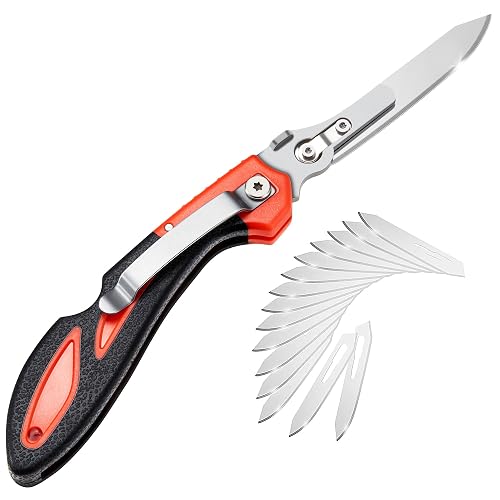 Best budget pickHunting Knife Skinning Knife Pocket FoldableView on Amazon
Our Top Picks
The table below summarizes how each knife fits common hunting needs. The detailed notes that follow are based on manufacturer specifications, blade-system design and patterns in owner feedback, not on hands-on testing.
Quick Comparison
| Product | Best for | Key feature |
|---|---|---|
| OUTDOOR EDGE RazorPro G Double Blade Hunting Knife | All-round field dressing | Two replaceable blade styles in one kit |
| OUTDOOR EDGE RazorMax Replaceable Fixed Blade Hunting Knife | Big game processing | Drop-point, boning and fillet blade options |
| OUTDOOR EDGE Knives’ RazorPro L Hunting Knife | Hunters who want a large blade supply | 12 replacement blades with belt holster |
| OUTDOOR EDGE 3.5″ RazorLite EDC Knife | Pocket carry and light tasks | Compact clip-carry folding-style design |
| Hunting Knife Skinning Knife Pocket Foldable | Budget-minded hunters | 15 extra replaceable blades and one-hand swap |
OUTDOOR EDGE RazorPro G Double Blade Hunting Knife
OUTDOOR EDGE RazorPro G Double Blade Hunting Knife – Replaceable Razor Sharp Skinning Blade & Gutting Knife for Fast Field Dressing, Non-Slip Black Handle, Black Sheath with 6 Extra Blades (Orange)
Best for: All-round field dressing and skinning with a balanced two-blade setup
This is a good fit for hunters who want one knife that covers both skinning and gutting without carrying a second tool. It suits deer and hog hunters who process their own game in the field.
Key specs
- Replaceable razor-sharp skinning blade and gutting blade system
- Non-slip black handle
- Black sheath included
- Six extra replacement blades listed with the kit
Pros
- Two blade styles cover the main field-dressing tasks
- Non-slip handle helps when hands are wet and bloody
- Blade swap is quick and does not require tools
Cons
- Replacement blade supply is smaller than in the larger kits
- Razor blades wear faster in hard bone contact, as owners commonly note
Bottom line: A strong default choice for hunters who want one reliable field-dressing knife with a practical blade mix.
OUTDOOR EDGE RazorMax Replaceable Fixed Blade Hunting Knife
OUTDOOR EDGE RazorMax – Replaceable Fixed Blade Hunting Knife with 3.5" Drop-Point, 5" Boning/Fillet Blades, Belt Sheath and Detachable Blade Carrier (Orange, 6 Blades)
Best for: Big game processing where you need separate skinning and boning blades
This knife suits hunters who break down deer or larger game and want longer blades for fillet and boning work. The included carrier keeps spare blades organized.
Key specs
- 3.5″ drop-point blade
- 5″ boning/fillet blades
- Belt sheath and detachable blade carrier
- Six blades in the orange kit
Pros
- Good blade variety for full-animal processing
- Detachable carrier keeps spare blades ready
- Drop-point shape suits general skinning
Cons
- Longer blades are less useful for small-game work
- Bulkier than pocket-carry designs
Bottom line: Best for hunters who process larger animals and want dedicated boning blades on hand.
OUTDOOR EDGE Knives’ RazorPro L Hunting Knife
OUTDOOR EDGE Knives' RazorPro L Hunting Knife with Razor-Sharp Replaceable Blade features Non-Slip TRP Orange Handle, Belt Holster, & 12 Blades. Must-Have Field Dressing Knife for Your Hunting Gear
Best for: Hunters who want a large blade supply for a long season
This kit suits hunters who go through blades quickly, such as those processing several animals or working in brushy, hard-use conditions, because the spare count is high.
Key specs
- Razor-sharp replaceable blade
- Non-slip TRP orange handle
- Belt holster included
- 12 replacement blades listed
Pros
- Large blade supply reduces mid-day resupply trips
- Orange handle is easy to find in leaf litter
- Belt holster keeps the knife accessible
Cons
- Handle is less compact than the pocket-style options
- Spare blades take up more space in a pack
Bottom line: A practical choice for hunters who value blade count and visibility over compact size.
OUTDOOR EDGE 3.5″ RazorLite EDC Knife
OUTDOOR EDGE 3.5" RazorLite EDC Knife. Pocket Knife with Replaceable Blades and Clip. The Perfect Hunting Blade for Skinning Deer. Blaze Orange with 6 Blades
Best for: Pocket carry and light field tasks
This compact knife is aimed at hunters who want a backup or day-carry blade that can handle quick cuts, rope and small-game skinning without the bulk of a full fixed-blade kit.
Key specs
- 3.5″ blade length
- Pocket clip
- Replaceable blade system
- Blaze orange finish
Pros
- Easy to carry on a belt or in a pocket
- Blaze orange is visible in the field
- Good for small-game and light tasks
Cons
- Short blade is not ideal for large-animal processing
- Pocket-clip retention varies with carry style
Bottom line: Best as a compact secondary knife or for hunters who mainly work small game.
Hunting Knife Skinning Knife Pocket Foldable
Hunting Knife Skinning Knife Pocket Foldable with 15 Extra Replaceable Sharp Blades, Safe and Fast Disassembly in 1 Second with Single Hand for Outdoor Hunting Survival Camping
Best for: Budget-minded hunters who want a large blade supply and fast swaps
This folding design targets hunters who want many spare blades and one-hand disassembly for quick blade changes. It is a sensible starting point for those new to replaceable-blade systems.
Key specs
- Foldable pocket design
- 15 extra replaceable blades listed
- One-hand disassembly for blade changes
Pros
- Very large spare blade count
- Compact when folded
- Quick one-hand blade swap
Cons
- Folding mechanisms have more points to clean than fixed handles
- Build details vary by seller, so check the listing carefully
Bottom line: A good value option for hunters who want many blades and a compact folder, provided they keep the mechanism clean.
Buying Guide
Before you buy a hunting knife with changeable blades, check the following factors against how you actually hunt.
Blade types and shapes
Drop-point blades suit general skinning, while gut-hook or gutting profiles help with field dressing. Boning and fillet blades are longer and thinner, which helps with meat separation. Match the blade shapes to the animals you hunt most.
Good picks for this: OUTDOOR EDGE RazorMax and OUTDOOR EDGE RazorPro G
Blade count and replacement supply
Count how many blades you will go through in a single season. Hunters processing several animals or working in gritty conditions often use more blades. Kits with a large spare count reduce the need for mid-trip resupply.
Good picks for this: OUTDOOR EDGE Knives’ RazorPro L and the folding pocket design
Handle grip and lock-up
A non-slip handle matters when hands are wet, cold or covered in blood. Check that the blade locks firmly into the handle before each use, and check the replacement procedure in the manual before you are in the field.
Good picks for this: OUTDOOR EDGE RazorPro G and OUTDOOR EDGE Knives’ RazorPro L
Size and carry style
Blade length and overall size determine whether a knife works as a main tool or a backup. For a sense of common lengths, compare the sizes covered in How Long Is a Hunting Knife? Common Blade Lengths and How to Choose before you decide. Pocket-sized knives suit light tasks, while belt-carried kits suit full processing.
Good picks for this: OUTDOOR EDGE 3.5″ RazorLite EDC Knife and OUTDOOR EDGE RazorMax
Sheath and carrier durability
A sheath that protects the edge and keeps spare blades organized is worth checking. Look for secure retention on your belt and a carrier that keeps spares from rubbing against each other. The sheath matters as much as the blade when you are moving through brush.
Good picks for this: OUTDOOR EDGE RazorMax and OUTDOOR EDGE Knives’ RazorPro L
Blade care and storage
Dry blades after use, keep spares sealed, and avoid storing them in a damp sheath. Replacement blades are thin, so handle them carefully when swapping. Sharpening angle matters too, so review Best Blade Angle for Hunting Knife: 15 vs 20 Degrees Per Side Compared if you touch up edges between blade changes.
Good picks for this: OUTDOOR EDGE RazorPro G and the folding pocket design
Hunting style and legal considerations
Your hunt type shapes the right knife. Fixed blades are common for field dressing, while folders suit general carry. Check local regulations on blade types and carry before you buy, since rules differ by state and by land type.
Good picks for this: OUTDOOR EDGE 3.5″ RazorLite EDC Knife and OUTDOOR EDGE RazorPro G
FAQ
What is a hunting knife with changeable blades?
It is a knife with a fixed or folding handle that accepts replacement blades. You swap the blade when it dulls or gets fouled, without sharpening in the field. Most systems use a lock or clip that holds each blade securely.
Are replaceable blades as sharp as sharpened blades?
Replacement blades are manufactured to a fixed edge, so they can feel sharper out of the package than a field-sharpened blade. Edge retention depends on the steel and the work you do, and owners commonly report that thin razor blades wear faster in bone contact.
How many spare blades should I carry?
For a single deer, two or three spares is a reasonable starting point. For multiple animals or a long trip, carry more. Count how many blades you used last season and add a margin.
Can I use these knives for small game?
Yes. Compact designs like the pocket-style knife work well for squirrel, rabbit and similar small game. Longer boning blades are better suited to large-animal processing.
Do I need a sheath with a replaceable-blade knife?
A sheath protects the edge and your body while moving through cover. Many kits include one, and a sheath that holds spare blades is useful in the field.
How do I change a blade safely?
Follow the manufacturer’s instructions for the specific model. Keep the knife pointed away from your body, work on a stable surface, and wear cut-resistant gloves if you have them. Consult the product manual before your first field change.
Conclusion
For most hunters, the OUTDOOR EDGE RazorPro G is the strongest all-round choice, pairing two blade styles with a non-slip handle. Hunters who process large animals should look at the RazorMax for its boning and fillet blades, while those who go through many blades in a season will value the RazorPro L’s spare count. The RazorLite suits pocket carry, and the folding pocket design offers a large blade supply for hunters on a tighter budget. Match the blade shape, count and carry style to the animals and conditions you actually hunt.
Sources
- Product safety guidance on sharp tools and handling injuries (cpsc.gov)
- State wildlife agency rules on game processing and legal hunting equipment (wildlife.utah.gov)
Before you buy: helpful guides
- Hunting Knife Display Stand: 5 Ways to Store and Show Your Blades
- Hunting Knife vs Combat Knife BF6: Which Blade Fits Your Hunt?
- Hunting Knife Blade Blanks: What They Are and How to Finish One (2026)
- Hunting Knife vs Combat Knife: Which Blade Fits Your Hunt?
- Hunting Knife Design Templates: A Step-by-Step Guide to Drawing Your Own Blade
Related reading
- What Is a Fixed Blade Hunting Knife? Uses, Parts and How to Choose
- What Is Considered a Hunting Knife? Fixed Blade vs Folding Knife (2026)
- Types of Hunting Knife Blades: Drop Point, Clip Point and More Explained
About Owen Palmer
Owen Palmer is part of our editorial team and reviews and edits our hunting guides, checking product details against manufacturer specifications and owner feedback.