By Owen Palmer
Updated November 2026
A tree stand that rotates lets you track deer moving across a wide field of view without shifting your weight or drawing attention. In this guide you will learn how rotating stands work, how to pick one that fits your setup, how to mount and balance it, and how to plan shooting lanes so the swivel actually earns its place in your hunt. Whether you hunt a single travel corridor or a funnel with several entry points, the right rotating platform can make your stand far more versatile.
What a Rotating Tree Stand Does Better Than a Fixed Stand
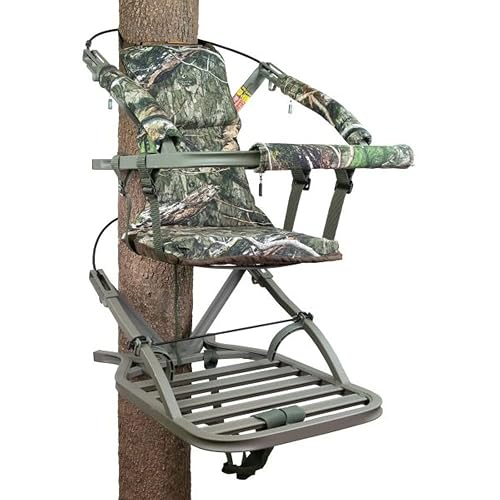
A fixed stand points you in one direction. You can shoot well in that arc, but deer that circle downwind, approach from the flank, or break from cover behind you leave you with few options. A tree stand that rotates gives you a 360-degree platform. You turn your body on the seat or platform, not your torso alone, so you can follow movement while keeping your silhouette low and your scent away from deer you are not yet targeting.
Shopping for one? See our guide: 7 Best Hunting Blind Heaters for Cold-Weather Deer Stands.
The trade-off is complexity. Rotating mechanisms add moving parts, more hardware, and more places for noise to start. Owners often report that the best rotating stands are the ones they set up with deliberate planning rather than bolting on a swivel as an afterthought.
Types of Rotating Tree Stands
Most rotating stands fall into a few categories. Knowing the differences will help you narrow your search before you spend any time comparing models.
| Type | How It Rotates | Best Use | Main Consideration |
|---|---|---|---|
| Swivel seat platform | Seat turns on a central bearing | Ladder and climber setups in mature timber | Seat must be locked before the shot |
| Full-body rotating platform | Entire platform turns with the hunter | Hunters who stand or sit in open-crown trees | Heavier, requires more stable mounting |
| Rotating shooting rail | Rail or bar spins around a fixed base | Ground blind-style setups adapted to trees | Limited vertical range |
| Hub-and-arm swivel | Arm rotates on a bracket around the trunk | Adding rotation to an existing stand | Requires solid trunk clearance |
Check the weight rating on any stand you buy. Manufacturers specify maximum hunter weight that includes your gear, and that number should leave margin for a bow, a pack, and any accessories.
Step 1: Scout and Plan Your Shooting Lanes
Before you touch a wrench, decide what the rotation is supposed to cover. Walk the property during the early season and mark the trails, bedding edges, and feeding areas you have confirmed with sign. A rotating stand works best when it sits near a convergence point where two or three routes meet.
Mark Your Primary and Secondary Lanes
Stand at your intended position and visualize where a deer will enter, pause, and exit. Mark the primary lane, usually the path you expect most traffic on, and one or two secondary lanes that cross at angles. Use flagging tape at about the height of a deer’s chest so you can see the lanes clearly from the ground and from the stand.
Account for Wind Direction
Watch prevailing wind during morning and evening periods, since thermals shift. A rotating stand lets you adjust your position to keep the wind in your favor, but you still need to plan the broad setup so the most likely approach stays downwind of your body when you turn.
Step 2: Choose the Right Tree
Tree selection controls both safety and shooting quality. Look for a trunk diameter that matches your manufacturer’s specification, typically with enough straight wood to fit the mounting hardware. Check for dead limbs, rot, and lean, and avoid trees that sway excessively in light breeze because movement transfers to the platform.
- Trunk is straight for at least 15 feet above the ground, or as high as your stand requires
- No dead or loose limbs within the shooting window
- Room to rotate without branches striking your bow or arms
- Solid footing and no soft ground that could shift the base
Step 3: Mount the Stand Safely
Mounting is where most accidents and most noise problems start. Follow the manufacturer’s instructions exactly, and do not skip the test steps.
- Clear brush and debris at the base and along the climbing path.
- Install the base or platform hardware at the height specified in the manual.
- Confirm the rotation mechanism turns freely before you climb.
- Lock the rotation at a neutral position and test weight distribution by standing on the platform while a helper watches.
- Attach a full-body harness to a separate line on the trunk and clip in before you leave the ground.
Balance and Stability Checks
Once mounted, shift your weight gently from side to side and rotate through the full range. You are looking for creaks, slippage, or any sense that the platform moves more than a fraction of an inch. Tighten all bolts after the first few hours of use, because settling is common in new installations.
Step 4: Set Up Rotation for Quiet, Smooth Movement
A rotating stand is only useful if you can move it without alerting deer. Lubricate the bearing or pivot with a product recommended by the manufacturer, and avoid heavy oils that attract dirt. Wrap any metal contact points with a dampening material such as rubber strip or felt to reduce clicks.
Practice the Turn at Home
Set up the stand in your yard or at a practice location and rotate through 90, 180, and full circle movements at a normal hunting pace. Time how long a complete turn takes. Owners often find that slow, deliberate turns produce less noise and movement than quick jerks, and that the best technique is to rotate your torso first, then the platform.
Step 5: Practice Shooting From the Rotated Position
Rotation changes your geometry. A shot taken after a 90-degree turn can look different from one taken straight ahead, especially with a bow. Practice drawing and anchoring while turned, using a target at varied angles. Confirm that your string or bow limbs clear the trunk and stand rails at full draw in each position.
Common Mistakes
- Rotating while a deer is close. Movement inside 20 yards is the most common cause of a busted hunt. Commit to the turn while deer are still distant.
- Skipping the lock. Some stands rotate under weight. Always lock or set the position before you draw.
- Overloading the platform. Adding a heavy bag or extra seat can exceed the rated limit and cause failure.
- Ignoring clearance. Branches can catch a bow or arm mid-turn, causing noise or a missed shot.
- Mounting too low. Low stands show more silhouette and give deer better sight lines when you turn.
- Neglecting maintenance. Grit in the bearing creates squeaks. Clean and lubricate on a regular schedule.
Tips for Better Results
- Set your primary lane first, then adjust the rotation so it covers secondary lanes without forcing an awkward turn.
- Use a rangefinder to mark distances to key points so you know yardage before you turn.
- Check the stand and mounting hardware at the start of each season, and after any storm or heavy wind.
- Keep your scent control routine consistent, since rotating can expose more of your body to deer approaching from behind.
- Coordinate with other hunters on the property so overlapping lanes do not create safety conflicts.
Recommended gear
A rotating stand works best when paired with a few supporting items. The first is a full-body harness with a separate lifeline, which is essential when you turn your body and shift weight. The second is a quality bearing lubricant rated for outdoor use, which keeps rotation quiet through cold and wet conditions. A third useful item is a set of rubber or felt dampening strips for contact points. Finally, a laser rangefinder helps you confirm distances to each lane before you rotate.
- A full-body fall-arrest harness with an independent lifeline, to stay attached while you turn and reposition. View on Amazon
- A marine-grade grease or bearing lubricant suited to swivel mechanisms, to keep turning quiet in cold weather. View on Amazon
- Self-adhesive rubber or foam dampening strips, to cushion metal contact points and cut rotation noise. View on Amazon
- A compact laser rangefinder, to confirm yardage to each lane before you commit to a shot. View on Amazon
FAQ
Is a tree stand that rotates safer than a fixed stand?
Not automatically. A rotating stand adds moving parts, so safety depends on proper installation, weight rating, and a secure harness system. Follow the manufacturer’s specifications and inspect the mechanism regularly.
How quiet can a rotating stand be?
Noise depends on the mechanism, lubrication, and how you turn. Owners often report that slow, controlled rotation with dampened contact points produces very little sound. Practice at home before the season.
Can I add rotation to an existing fixed stand?
Some hunters add a hub-and-arm swivel or rotating platform to an existing stand, but compatibility varies. Check the stand’s design and weight rating before modifying it, and consult the manufacturer if unsure.
Should I lock the rotation when I shoot?
Yes, in most cases. Locking or setting the position reduces movement under draw and helps you hold steady. Make sure the lock is secure before you draw.
How high should a rotating tree stand be mounted?
Mounting height depends on the stand and local regulations. Many hunters use heights between 12 and 20 feet, but always follow the manufacturer’s maximum height and your state’s rules.
How often should I inspect the rotation mechanism?
Inspect before each season and after any severe weather. Check bolts, bearings, and the harness attachment points. Lubricate the pivot according to the manufacturer’s schedule.
Does rotation help with wind and scent control?
Rotation lets you reposition to keep wind in your favor, but it does not replace a complete scent control routine. Plan your setup around prevailing wind and keep your gear clean.
Conclusion
A tree stand that rotates gives you the ability to track deer across multiple approaches without giving away your position. Success depends on choosing the right type, mounting it securely, planning lanes around wind and traffic, and practicing smooth movement before the season. Take the time to set it up properly, and the rotation will work for you rather than against you. Always follow the manufacturer’s weight and height limits, and consult a professional installer if you are unsure about any part of the setup.
Related reading
- Solar Panel for Hunting Blind: A Step-by-Step Guide to Powering Your Stand
- Hunting Knife Display Stand: 5 Ways to Store and Show Your Blades
Ready to choose one?
About Owen Palmer
Owen Palmer is part of our editorial team and reviews and edits our hunting guides, checking product details against manufacturer specifications and owner feedback.