By Owen Palmer
Updated November 2026
Getting a clear bobcat on trail camera footage takes more than setting a camera at a game trail and hoping for the best. Bobcats are shy, mostly nocturnal, and move quietly through cover, so the camera you pick needs fast triggering, a flash that will not spook the animal, and enough resolution to tell a bobcat from a large house cat or a coyote at night. The picks below were compared on specifications, brand reputation and the patterns owners commonly report, with the priorities being night performance, trigger speed, detection reliability and ease of setup for predator and wildlife monitoring.
Our top picks at a glance
- 1
 TOP CHOICEBest overallMoultrie Edge 3 Cellular Trail Camera 2-Pack, 40MPView on Amazon
- 2
 TOP CHOICEBest for remote areas without cell serviceTasco 12MP Trail Camera with Low Glow Infrared FlashView on Amazon
- 3
 TOP CHOICEBest for monitoring a feeding site2 Pack Trail Cameras with Night Vision 48MP Hunting Game CameraView on Amazon
- 4
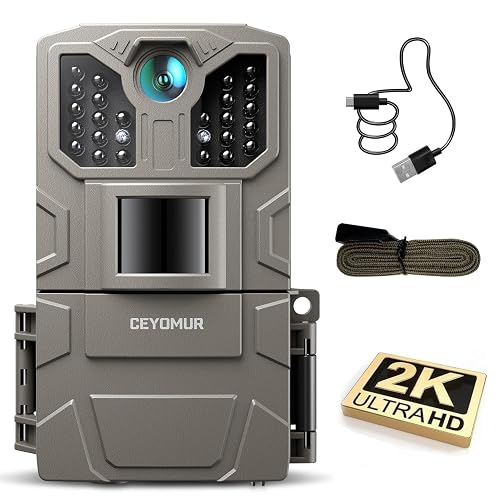 Best for reviewing footage in the fieldCEYOMUR 36MP Trail Cam with 2.0" Color ScreenView on Amazon
- 5
 Best for farm and equipment monitoringSkid Steer Backup Camera Dual-View 7 Inch 1080p HDView on Amazon
Our Top Picks
The table below summarizes how each camera fits a different need. Read the product sections that follow for specifications, strengths and limitations before choosing.
| Product | Best for | Key feature |
|---|---|---|
| Moultrie Edge 3 Cellular Trail Camera 2-Pack | Remote monitoring with phone alerts | Cellular photo delivery, 40MP, 0.5s trigger |
| Tasco 12MP Trail Camera | Remote areas and budget setups | Low glow infrared flash |
| 2 Pack Trail Cameras 48MP Hunting Game Camera | Feeding sites and travel corridors | Night vision, waterproof housing |
| CEYOMUR 36MP Trail Cam | Checking footage on site | 2.0″ color screen, 850nm IR LEDs |
| Skid Steer Backup Camera Dual-View | Farm equipment and property security | Dual-view 1080p with DVR recorder |
Moultrie Edge 3 Cellular Trail Camera 2-Pack, 40MP
Scout from Anywhere, HD photos via Mobile app, 1080p video, multi-carrier, low-glow flash, GPS, Two Pack Moultrie Edge 3 Cellular Trail Camera – 2-Pack, 40MP, 0.5s Trigger
Best for: Remote monitoring with phone alerts
This is the option for anyone who wants to see a bobcat on trail camera images without walking back to the site. It suits landowners, predator managers and hunters who check sets from a distance and want photos delivered while the activity is still fresh.
Key specs
- 40MP still images
- 0.5-second trigger speed
- Multi-carrier cellular connectivity
- Low-glow flash for nighttime capture
- HD video up to 1080p
- GPS location tagging
Pros
- Photos arrive through the mobile app, so you can confirm a cat is present quickly.
- Fast trigger speed reduces the chance of a bobcat leaving the frame before capture.
- Two-pack format lets you cover a feeding site and a travel corridor at once.
Cons
- Cellular service and data plans are an ongoing requirement, and coverage varies by location.
- Cellular models draw more power than basic cameras, so battery planning matters.
Bottom line: The best fit for anyone who wants remote alerts and reliable daytime and nighttime images of wildlife, including bobcats.
Tasco 12MP Trail Camera with Low Glow Infrared Flash
Tasco 12MP Trail Camera with Low Glow Infrared Flash
Best for: Remote areas without cell service
This camera is aimed at users who do not need cellular uploads and simply want to retrieve an SD card after a few weeks. It works well for scouting, property checks and casual wildlife monitoring where a bobcat on trail camera frame is an occasional bonus rather than the main goal.
Key specs
- 12MP still images
- Low glow infrared flash
- Motion-activated recording
- Removable SD card storage
Pros
- No monthly service fees or cellular plan required.
- Low glow flash is less likely to alert wary animals than a bright white flash.
- Simple setup with minimal menus for quick deployment.
Cons
- 12MP resolution is lower than newer models, so fine detail at distance can be limited.
- You must visit the site to retrieve images, which delays information.
Bottom line: A sensible choice for remote sets where you can check the camera regularly and do not need live updates.
2 Pack Trail Cameras with Night Vision 48MP Hunting Game Camera
2 Pack Trail Cameras with Night Vision Motion Activated Waterproof,48MP Hunting Game Camera,1080P HD Trail Cam for Wildlife Monitoring,Outdoor Scouting & Security(Non-Cellular Non-WiFi)
Best for: Feeding sites and travel corridors
Two cameras on one site let you compare angles or cover a feeder and a trail at the same time. This pack suits users who want broad coverage at a modest setup cost in terms of time and gear, and who plan to review footage on a card.
Key specs
- 48MP still images
- 1080P HD video
- Night vision motion activation
- Waterproof housing for outdoor use
- Non-cellular, non-WiFi operation
Pros
- Two units give you flexibility to cover two locations with one purchase.
- High megapixel rating helps when you crop images of distant animals.
- Waterproof construction suits rain, dew and humid conditions.
Cons
- Non-cellular operation means you must retrieve cards manually.
- Megapixel counts from budget brands do not always reflect real sensor quality, so check sample images before relying on them.
Bottom line: A practical two-camera option for monitoring a feeder and a travel route without cellular costs.
CEYOMUR 36MP Trail Cam with 2.0″ Color Screen
850nm IR LEDs, Video Game Camera with 2.0" Color Screen, IP66 Waterproof for Wildlife Monitoring CEYOMUR Trail Camera, 36MP HD Trail Cam with Night Vision Motion Activated
Best for: Checking footage on site
The built-in color screen lets you review images without a computer or card reader, which is useful when you need to confirm that a bobcat on trail camera frame is actually a bobcat and not a farm cat. It is a good fit for hands-on wildlife observers.
Key specs
- 36MP still images
- 2.0-inch color screen
- 850nm IR LEDs
- IP66 waterproof rating
- Motion-activated night capture
Pros
- The on-camera screen makes it easy to check setup angle and review recent captures.
- 850nm infrared LEDs are a common choice for low-visibility night capture.
- IP66 rating indicates protection against dust and water spray.
Cons
- Infrared flash at 850nm produces a visible red glow that some animals can detect.
- Screen-based review drains batteries faster than passive recording.
Bottom line: A good pick for users who want immediate on-site review and reliable night capture.
Skid Steer Backup Camera Dual-View 7 Inch 1080p HD
Skid Steer Backup Camera Dual-View 7 Inch 1080p HD, Camera, and DVR Recorder for Farm Tractor Trucks, RVs, Trailers, and Farm Heavy Equipment
Best for: Farm equipment and property security
This is a monitoring system built for tractors, trucks and heavy equipment rather than wildlife. It is included because some landowners use fixed-view camera systems around barns and pastures to observe predators near livestock. It is not designed for field-scouting a bobcat on trail camera setup, so treat it as a specialized alternative.
Key specs
- 7-inch display
- 1080p HD dual-view camera
- DVR recorder included
Pros
- Continuous recording system suits fixed monitoring at a barn or equipment yard.
- Dual-view capability covers two angles from one display.
- Built for rugged outdoor and vehicle use.
Cons
- Not motion-triggered in the way wildlife trail cameras are, so it records large amounts of footage.
- Requires power wiring and a display, which limits portability.
Bottom line: Only suitable if you need a permanent monitoring system at a farm or yard, not a field trail camera.
Buying Guide
Choosing a camera for bobcat detection comes down to a few measurable factors. Work through them before committing.
Trigger speed and detection range
Bobcats cross a frame quickly. Look for a trigger speed around half a second or faster, and check the manufacturer’s stated detection range. Cameras aimed at a feeder or a narrow trail generally perform better than those aimed across open ground.
Good picks for this: Moultrie Edge 3 Cellular Trail Camera 2-Pack, 2 Pack Trail Cameras with Night Vision 48MP
Flash type and nighttime capture
Bobcats are wary and react to bright light. Low-glow or 850nm infrared flashes are less disruptive than white flashes. Keep in mind that 850nm produces a faint red glow, while true no-glow (940nm) options exist but tend to produce weaker night images.
Good picks for this: Tasco 12MP Trail Camera with Low Glow Infrared Flash, CEYOMUR 36MP Trail Cam
Resolution and image detail
A 12MP sensor is usually adequate for identifying a cat at moderate distance. Higher megapixel counts help when you crop images, but sensor quality matters more than the number on the box. Review sample images from the manufacturer or owner posts before choosing.
Good picks for this: Moultrie Edge 3 Cellular Trail Camera 2-Pack, Tasco 12MP Trail Camera
Connectivity and alerts
If you cannot visit the site often, cellular connectivity lets you receive photos quickly. Non-cellular cameras require you to retrieve SD cards, which is fine for periodic checks. Factor in ongoing service costs and coverage at your location.
Good picks for this: Moultrie Edge 3 Cellular Trail Camera 2-Pack, Tasco 12MP Trail Camera
Weather resistance and durability
Cameras face rain, humidity, dust and temperature swings. Look for an IP rating; IP66 indicates protection against dust and strong water spray. Confirm that the housing is rated for outdoor use and that the locking mechanism is secure.
Good picks for this: CEYOMUR 36MP Trail Cam, 2 Pack Trail Cameras with Night Vision 48MP
Mounting and placement
Mount the camera about 2 to 3 feet off the ground for cat-sized animals, angle it slightly downward, and aim at a narrow corridor about 10 to 20 feet away. Avoid pointing directly at the sun or a bright open sky, which can cause overexposure. Use a sturdy tree or post mount.
Good picks for this: Tasco 12MP Trail Camera with Low Glow Infrared Flash, 2 Pack Trail Cameras with Night Vision 48MP
Battery life and power planning
Battery life depends on trigger frequency, flash use, screen use and cellular transmissions. Cameras with color screens and cellular modules draw more power. Carry spare batteries and check them at each visit, especially during cold weather when battery output drops.
Good picks for this: CEYOMUR 36MP Trail Cam, Moultrie Edge 3 Cellular Trail Camera 2-Pack
FAQ
Can a trail camera reliably capture bobcats?
Yes, but results depend on placement, trigger speed and the flash type. Bobcats are often active at dawn, dusk and night, so a camera with good low-light performance and a fast trigger gives the best odds.
What is the best height to mount a camera for bobcats?
Mounting about 2 to 3 feet off the ground usually captures a cat-sized animal’s full body. Higher mounts can work for overhead shots, but they may cut off the animal’s lower body.
Does the flash type affect how bobcats behave?
Bright white flashes can alert wary animals, and some animals may avoid a camera that flashes frequently. Low-glow or infrared flashes are generally less disruptive, though no flash is completely invisible to every animal.
How do I tell a bobcat from a house cat or a coyote on camera?
Bobcats are larger than most house cats, with a short “bobbed” tail, prominent facial ruff and longer legs. Coyotes have a longer, bushier tail and a different body shape. Compare the animal’s size against nearby objects, such as a fence post or feeder, to judge scale.
Do I need a cellular trail camera to monitor bobcats?
Not necessarily. Non-cellular cameras work well if you can check the site regularly. Cellular models help when you need quick alerts or cannot visit often, but they carry ongoing service requirements.
How long should batteries last?
Battery life varies widely with trigger frequency, flash use and features like screens and cellular transmission. Check the manufacturer’s stated battery life for your settings, and plan to inspect batteries at each visit.
Are trail cameras legal to use on private land?
Generally yes, with the landowner’s permission. Rules for public land differ by state, and some agencies restrict or require registration for cameras on public property. Check your state wildlife agency’s rules before deploying a camera.
Conclusion
For most people looking for a bobcat on trail camera setup, the Moultrie Edge 3 Cellular Trail Camera 2-Pack is the most complete option, since its fast trigger, high resolution and cellular alerts suit remote monitoring. The Tasco 12MP Trail Camera is a practical choice for remote areas without cell service and low glow flash needs. The 2 Pack 48MP camera set suits monitoring two locations at once, and the CEYOMUR 36MP model is best for users who want to review footage on the spot. The Skid Steer Backup Camera is a specialized option for permanent farm or yard monitoring rather than wildlife scouting. Match the camera to your access, power and alert needs, and always test placement before relying on it.
Sources
- Federal guidance on wildlife observation and monitoring practices (fws.gov)
- Information on wildlife behavior and safe observation near park wildlife (nps.gov)
- State wildlife agency rules and resources for remote camera use (wildlife.utah.gov)
Related reading
- Trail Camera Lock Boxes: How to Choose and Secure Your Camera (2026)
- Trail Camera Buying Guide
- Muddy Trifecta 180 Cellular Trail Camera: 6 Best Options Compared (2026)
- How to Set Up a Trail Camera for Wildlife
About Owen Palmer
Owen Palmer is part of our editorial team and reviews and edits our hunting guides, checking product details against manufacturer specifications and owner feedback.