Quick answer
Our overall pick is the ACR ResQLink View RLS PLB for its confirmation service and LCD screen. Other picks suit those wanting the most compact design, built-in buoyancy, or local AIS alerts for maritime use.
When you’re heading into remote areas, a personal locator beacon (PLB) can be a critical piece of safety gear, sending a satellite distress signal to search and rescue teams. Our list of the 11 best personal locator beacons is based on comparing manufacturer specifications and listed features to highlight key differences in size, battery life, and unique functions. We focused on devices that use the global COSPAS-SARSAT satellite network, require no subscription, and are designed for activities like hiking, fishing, and boating.
Quick picks
- Overall Pick with Confirmation: ACR ResQLink View RLS PLB (see on Amazon)
- Most Compact & Lightweight: Ocean Signal rescueME PLB1 (see on Amazon)
- Buoyant with RLS Confirmation: ACR ResQLink 410 RLS (see on Amazon)
- Adds Local AIS Alerts: ACR RESQLINK AIS PLB-450 (see on Amazon)
11 Best Personal Locator Beacons compared
| # | Product | Best for | Weight | Battery Life | Waterproof Rating |
|---|---|---|---|---|---|
| 1 | ACR ResQLink View RLS PLB | Best overall with LCD screen and RLS | 0.33 pounds | 5-year / 28+ hours | Not listed |
| 2 | ACR ResQLink 410 RLS | Best buoyant PLB with RLS | Not listed | 5-year / 24+ hours | Not listed |
| 3 | Jotron Tron SA20 PLB | Best with NFC smartphone connectivity | Not listed | Not listed | Not listed |
| 4 | ACR ResQlink View 435 RLS Bundle | Best RLS bundle with carrying pouch | Not listed | Not listed | Not listed |
| 5 | ACR ResQlink 410 RLS Bundle | Best RLS-ready bundle | Not listed | Not listed | Not listed |
| 6 | ACR ResQLink View PLB425 | Best buoyant PLB with optional testing | 0.33 pounds | Not listed | Not listed |
| 7 | Ocean Signal rescueME PLB1 | Best for minimal size and weight | 0.255625 pounds | Not listed | 49 feet |
| 8 | McMurdo FastFind 220 PLB | Best for US-registered users | Not listed | Not listed | Not listed |
| 9 | ACR ResQLink 400 PLB | Best basic global PLB | 0.33 pounds | Not listed | Not listed |
| 10 | ACR ResQlink 400 Bundle | Best basic PLB bundle with pouch | Not listed | Not listed | Not listed |
| 11 | ACR RESQLINK AIS PLB-450 | Best for dual satellite & local maritime alerts | 0.42328754304 pounds | Not listed | Not listed |
How we chose
We compared manufacturer listings and specifications on Amazon as of October 2026. We did not test, use, or review any products hands-on. Our picks are based on comparing listed features, dimensions, battery life, and operational capabilities to identify the best personal locator beacons for different needs.
PLBs with Return Link Service (RLS) Confirmation
These beacons provide confirmation that your distress signal has been received.
1. Best overall with LCD screen and RLS: ACR ResQLink View RLS PLB

Pros
- RLS provides confirmation signal receipt.
- 5-year battery life with 28+ hour operational life.
- Global GPS and Galileo GNSS coverage.
Cons
- The listing does not mention a specific waterproof rating.
The ACR ResQLink View RLS PLB features a digital display and Return Link Service (RLS) to confirm that search and rescue has received your distress signal. It has a 5-year battery life with over 28 hours of operational use and is compatible with GPS, Galileo GNSS, and MEOSAR for global coverage. The listing notes it includes an infrared strobe for enhanced visibility.
Best for: Outdoor enthusiasts who want visual confirmation that their SOS has been received.
2. Best buoyant PLB with RLS: ACR ResQLink 410 RLS

Pros
- RLS confirmation and built-in buoyancy.
- 5-year battery life with 24+ hour operational life.
- Global GPS and Galileo GNSS coverage.
Cons
- The listing does not mention a specific waterproof rating.
The ACR ResQLink 410 RLS offers Return Link Service confirmation and built-in buoyancy. It has a 5-year battery life with 24+ hours of operational use and is compatible with GPS, Galileo GNSS, and MEOSAR. It includes both strobe and infrared strobe lights.
Best for: Those who want buoyancy and confirmation of signal receipt in one unit.
3. Best with NFC smartphone connectivity: Jotron Tron SA20 PLB

Pros
- NFC for smartphone status readout.
- RLS confirmation.
- Programmed for US registration.
Cons
- The listing provides no specifications for size, weight, battery, or waterproofing.
The Jotron Tron SA20 PLB is programmed for US registration and offers global coverage on 406/121.5 MHz. It features Return Link Service (RLS) and integrated Near-Field Communication (NFC) connectivity, allowing for easy status readout via a smartphone.
Best for: Tech-savvy users who want to check beacon status easily with their phone.
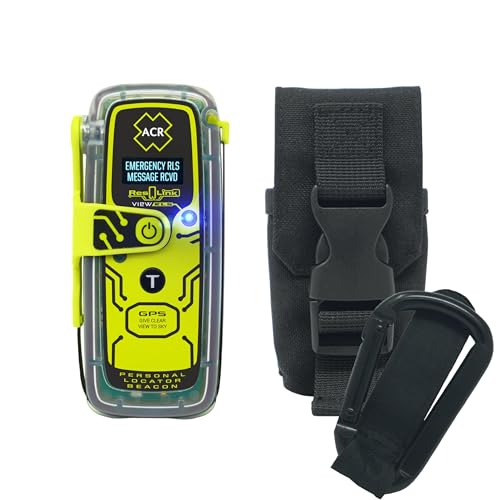
4. Best RLS bundle with carrying pouch: ACR ResQlink View 435 RLS Bundle
Pros
- Includes protective pouch and carabiner.
- RLS confirmation.
- No subscription needed.
Cons
- The listing does not provide specs for the beacon itself.
- The listing does not mention battery life or waterproof rating.
This bundle includes the ACR ResQlink View 435 RLS personal locator beacon, a protective pouch, and a carabiner. The PLB offers RLS confirmation, global coverage, and LED/infrared strobes. The pouch has a belt attachment for securing to gear.
Best for: Users who want RLS confirmation and a dedicated, attachable carrying case.
5. Best RLS-ready bundle: ACR ResQlink 410 RLS Bundle

Pros
- RLS confirmation.
- Global satellite coverage.
- No subscription needed.
Cons
- The listing does not clarify what the bundle includes.
- The listing does not mention battery life, weight, or waterproof rating.
This product is the ACR ResQlink 410 RLS personal locator beacon. It offers Return Link Service confirmation, global satellite coverage, and LED/infrared strobes, with no subscription required. The listing title indicates it is a bundle, but the item count is listed as 1.
Best for: Shoppers looking for a PLB with RLS confirmation in a bundled package.
Compact and Buoyant PLBs
These models are noted for their small size, light weight, and built-in buoyancy.
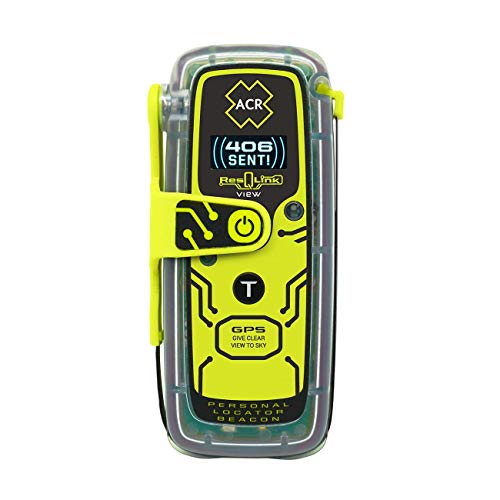
6. Best buoyant PLB with optional testing: ACR ResQLink View PLB425
Pros
- Buoyant design with multiple attachment options.
- Optional subscription for non-emergency test messages.
- Global COSPAS-SARSAT coverage.
Cons
- The listing does not mention a specific waterproof rating.
- Optional test features require a subscription.
The ACR ResQLink View PLB425 is a buoyant, lightweight personal locator beacon that sends a 406 MHz distress signal with GPS position directly to search and rescue worldwide. It includes attachment clips, straps, and lanyards. With an optional subscription, it can send pre-canned test messages to contacts via SMS and email.
Best for: Boaters and hikers who want a buoyant beacon with optional two-way test messaging.
7. Best for minimal size and weight: Ocean Signal rescueME PLB1

Pros
- Highly compact and lightweight (4 oz).
- One-handed operation.
- Waterproof to 49 feet.
Cons
- The listing does not mention a specific battery life in years.
The Ocean Signal rescueME PLB1 is noted as being 30% smaller than the brand’s next smallest beacon, weighing just over 4 ounces. It features one-handed operation, is waterproof up to 49 feet, and includes a unique mounting clip for lifejackets or backpacks.
Best for: Anglers and hikers who prioritize saving the most space and weight in their pack.
8. Best for US-registered users: McMurdo FastFind 220 PLB

Pros
- Pre-programmed for US registration.
- Designed for activation in extreme conditions.
- Global functionality.
Cons
- The listing does not mention battery life or waterproof rating.
- Dimensions appear inconsistent in the data.
The McMurdo FastFind 220 is a personal locator beacon pre-programmed for registration in the United States. It functions globally, contacting US search and rescue first. The listing emphasizes that registration is required by law and is critical for identification.
Best for: Users who need a PLB registered specifically with US authorities.
9. Best basic global PLB: ACR ResQLink 400 PLB

Pros
- No subscription required.
- Global COSPAS-SARSAT/MEOSAR coverage.
- LED and infrared strobes.
Cons
- The listing does not mention battery life or a waterproof rating.
The ACR ResQLink 400 PLB requires no subscription and sends a 406 MHz distress signal with a 121.5 MHz homing signal for global coverage via COSPAS-SARSAT and MEOSAR. It includes an LED strobe and an infrared strobe for visibility.
Best for: Anyone seeking a reliable, no-subscription PLB with essential strobe features.
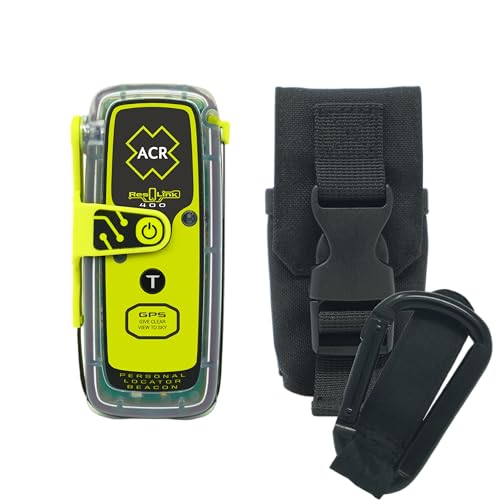
10. Best basic PLB bundle with pouch: ACR ResQlink 400 Bundle
Pros
- Includes protective pouch and carabiner.
- Global satellite coverage.
- No subscription needed.
Cons
- The listing does not provide specs for the beacon itself.
- The listing does not mention battery life or waterproof rating.
This bundle includes the ACR ResQlink 400 personal locator beacon, a protective pouch, and a carabiner. The PLB uses 406 MHz and 121.5 MHz signals for global COSPAS-SARSAT/MEOSAR coverage and includes LED and infrared strobes.
Best for: Those seeking a simple, no-subscription PLB that comes ready to attach to a pack or belt.
11. Best for dual satellite & local maritime alerts: ACR RESQLINK AIS PLB-450

Pros
- Adds local AIS alert to nearby boats.
- RLS confirmation and NFC for mobile data.
- Global satellite coverage.
Cons
- The listed dimensions (20 inches) appear implausible for a PLB.
- AIS range is subject to conditions.
The ACR RESQLINK AIS PLB-450 sends a global 406 MHz satellite distress signal and a local VHF AIS alert to vessels with AIS receivers within approximately 5 miles. It also features RLS confirmation and NFC technology for mobile access to beacon data like battery life and test history.
Best for: Boaters and anglers who want both satellite rescue and local VHF alerts to nearby vessels.
How to choose a personal locator beacon
Choosing the right personal locator beacon (PLB) is about matching its capabilities to your activities and risk profile. All PLBs on our list use the international 406 MHz frequency and the COSPAS-SARSAT satellite system, which requires no subscription and alerts search and rescue agencies globally. The first step is to legally register your beacon with the national authority; this provides rescuers with your emergency contacts and details. For more on trip planning and safety protocols, see our guide on outdoor safety.
What to look for
- Confirmation Services: Features like Return Link Service (RLS) send a message back to the beacon confirming your distress signal was received, providing critical peace of mind.
- Size and Buoyancy: If you’re a boater or angler, a buoyant design is essential. For backpackers, the smallest and lightest models minimize pack weight and bulk.
- Battery Life: PLBs have a non-replaceable battery with a multi-year shelf life and a shorter operational life once activated (e.g., 24+ hours). Check both metrics.
- Additional Alerts: Some beacons add local alert systems like AIS (for nearby boats) or 121.5 MHz homing signals to help rescuers pinpoint you on final approach.
Always follow the manufacturer’s instructions for testing, maintenance, and activation. A PLB is for life-threatening emergencies only. For broader safety resources, you can consult the U.S. Coast Guard Boating Safety site and the National Weather Service for conditions.
FAQ
Do personal locator beacons require a subscription?
No. All the personal locator beacons on our list use the international COSPAS-SARSAT satellite system, which does not require a monthly or annual subscription fee. You must, however, register the beacon with your national authority, which is a one-time process.
What’s the difference between a PLB and a satellite messenger?
A Personal Locator Beacon (PLB) is a dedicated, single-purpose device for sending a life-threatening distress signal to search and rescue authorities via satellite. Satellite messengers often allow for two-way texting, tracking, and non-emergency communication but typically require a subscription. PLBs generally have longer battery shelf lives and are built to more rugged standards.
How important is waterproofing in a PLB?
Very important. Emergencies can happen in rain, snow, or if you fall into water. Many PLBs are designed to be waterproof at significant depths. For maritime activities, a buoyant design is also a critical safety feature to keep the beacon afloat and transmitting.
Can I test my PLB?
Yes, but you must follow the manufacturer’s instructions precisely to avoid accidentally triggering a real distress signal. Most beacons have a self-test function that checks battery and GPS functionality without transmitting to satellites. Some models offer optional subscription services for sending test messages to your own contacts.
References
- Amazon product listings and manufacturer specifications (accessed October 2026)
- U.S. Coast Guard Boating Safety Resource Center
- National Weather Service: Safety