As an Amazon Associate I earn from qualifying purchases. This page may contain affiliate links.
The best way to sharpen hunting knife blades depends on where you are sharpening, how dull the edge has gotten, and how much control you want over the bevel angle. A knife that cut cleanly at camp can drag through hide and tissue after a long day, and a tired hunter is the wrong person to be guessing at angles. This guide looks at six sharpeners that cover the main situations: a quick touch-up in the field, a full restoration at the workbench, and the stone-and-strop routine that many experienced hunters prefer for a polished edge. Each pick was chosen by comparing manufacturer specifications, brand reputation for edge-sharpening tools, and the patterns owners tend to mention in reviews, including grit range, angle control, portability, and how well the tool handles the drop-point and skinning blades common in hunting knives. We have not tested these products ourselves; the notes below reflect published specifications and general owner feedback.
Our Top Picks
Quick Comparison
| Product | Best for | Key feature |
|---|---|---|
| Work Sharp Portable 5 Stage Sharpener | Field sharpening on a hunting trip | Guided five-stage system with diamond, ceramic and leather strop |
| Work Sharp Benchstone Knife Sharpener | Home workbench restoration | Three-sided stone for multiple grit levels |
| AccuSharp Knife Sharpener | Simple, low-effort touch-ups | Compact handle with built-in carbide and ceramic sharpening |
| Gerber Edgefield Knife Sharpener | Camp-side maintenance | Dual-grit portable design |
| Diamond-Coated Ceramic Whetstones with Angle Guide | Controlled bevel angles at home | Adjustable 14 to 24 degree angle guide |
| Complete Knife Sharpening Stone Set | Full progression from repair to polish | Dual-grit stones with leather strop and flattening stone |
Work Sharp Portable 5 Stage Sharpener with Diamond, Ceramic and Leather Strop

Portable 5 Stage Sharpener with Diamond, Ceramic and Leather Strop. Restore Any Edge Anywhere Work Sharp Guided Field Sharpener, Hunting and Fishing Knife Sharpener
Who it is for: Hunters who want to restore and maintain an edge in the field or at a fishing camp without carrying a full bench setup. It suits people who value repeatable angles over hand-sharpening skill.
Key specs:
- Five-stage sharpening system including diamond, ceramic and leather strop stages
- Portable design intended for field use
- Guided sharpening for hunting and fishing knives
Pros:
- Stages move from coarse restoration to fine polish in one tool
- Guided design helps keep the angle consistent
- Compact enough to pack in a hunting bag
Cons:
- Stage changes take more time than a simple pull-through sharpener
- Owners often mention a learning curve on the first few edges
Work Sharp Benchstone Knife Sharpener, 3 Sided

Work Sharp Benchstone Knife Sharpener, 3 sided for faster manual pocket or hunting knife sharpening
Who it is for: Hunters who do their sharpening at home and want a stable, multi-grit stone for pocket and hunting blades, including larger skinners.
Key specs:
- Three-sided design offering multiple grit options
- Benchstone format for use on a flat, stable surface
- Suitable for pocket and hunting knives
Pros:
- Multiple sides mean one tool covers coarse and fine work
- Stable base reduces wobble compared with handheld stones
- Good for rebuilding a neglected edge at home before a season
Cons:
- Not practical to carry into the field
- Requires a steady hand and consistent angle for best results
AccuSharp Knife Sharpener, Ergonomic Handle, Camo
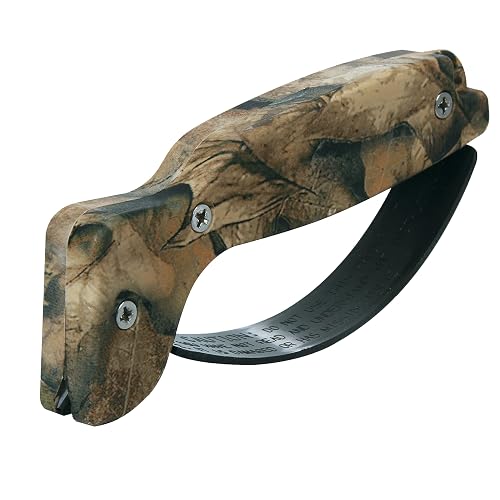
AccuSharp Knife Sharpener, Ergonomic Comfortable Handle, Compact & Easy to Use, Restore and Hone Straight & Serrated Knives, Camo
Who it is for: Hunters who want a fast, low-effort touch-up tool that fits in a pocket or a vest and needs no setup.
Key specs:
- Ergonomic handle with a compact profile
- Designed to restore and hone both straight and serrated edges
- Camo finish
Pros:
- Very quick to use for a light touch-up
- Simple enough for beginners to use with minimal practice
- Easy to keep in a pack or truck console
Cons:
- Limited control over bevel angle compared with guided systems
- Owners often report it is not suited to heavy re-profiling of a badly damaged edge
Gerber Edgefield Knife Sharpener, Dual Grit, Burnt Orange

Gerber Edgefield Knife Sharpener, Dual Grit, Camping, Portable, Burnt Orange
Who it is for: Hunters and campers who want a dedicated, portable dual-grit sharpener that stays easy to find in a camp kit.
Key specs:
- Dual-grit design for coarse and fine passes
- Portable format for camping and field use
Pros:
- Dual grit covers both sharpening and finishing
- Gerber is a well-established knife brand, which many buyers find reassuring
- Bright color makes it easy to spot in gear
Cons:
- Fewer grit options than a multi-stage system
- Owners sometimes mention that the stone can wear unevenly with heavy use
Diamond-Coated Ceramic Whetstones with Adjustable Angle Guide

Diamond-Coated Ceramic Whetstones, Works for Kitchen Knives & Professional Chefs, Sturdy Grip & Non-Slip Rubber for Safety Knife & Scissor Sharpener | Adjustable 14-24 Degree Angle Guide
Who it is for: Hunters who want to control the bevel angle on a stone at home and who may also sharpen kitchen knives or shears.
Key specs:
- Diamond-coated ceramic stone surface
- Adjustable angle guide from 14 to 24 degrees
- Non-slip rubber base for stability
Pros:
- Angle guide makes consistent bevels easier to hold
- Diamond coating cuts quickly on hard steels
- Non-slip base keeps the stone from shifting on the bench
Cons:
- Stones need flattening over time to keep the surface true
- Setup takes more time than a field sharpener
Complete Knife Sharpening Stone Set with Leather Strop and Flattening Stone

Complete Knife Sharpening Stone Set – Dual Grit Whetstone 400/1000 3000/8000 Knife Sharpener with Leather Strop, Flattening Stone, Bamboo Base, 3 Non-slip Rubber Bases & Angle Guide
Who it is for: Hunters who want the full traditional progression from repair to polish and are willing to spend a little time at the bench each season.
Key specs:
- Dual-grit whetstone with 400/1000 and 3000/8000 grit pairs
- Includes leather strop, flattening stone, and angle guide
- Bamboo base with non-slip rubber feet
Pros:
- Full progression covers repair, sharpening and polishing
- Flattening stone helps keep the working surface true
- Bamboo base and rubber feet make a stable workstation
Cons:
- Water stones require soaking and cleanup after use
- Steeper learning curve than guided or pull-through tools
Buying Guide
Choosing the right sharpener starts with where you will use it. A field sharpener has to be small, quick, and forgiving. A bench system can be larger and more precise, but it asks for more time and more practice. Think about the knives you carry, too. A thin skinning blade with a 15 to 20 degree bevel behaves differently from a heavier fixed blade with a more obtuse edge, so the sharpener should let you match the original angle.
Selection Criteria
- Grit range: Coarse grit (around 400 or lower) repairs chips and rounds over the edge. Medium grit (around 1000) sharpens. Fine grit (3000 and above) polishes and refines.
- Angle control: Guided systems and angle guides make it easier to repeat the same bevel every time.
- Portability: Field tools should be light, rugged, and easy to use without water or setup.
- Blade compatibility: Check whether the tool handles straight edges only or also serrations.
Specs to Check
Look at the grit designation, the stone material (diamond, ceramic, or traditional water stone), whether the sharpener needs water or oil, and whether a strop or flattening stone is included. For hunting knives specifically, confirm that the tool can handle the blade width and thickness you carry.
Choosing by Need
- In the field: A compact guided or pull-through sharpener keeps the edge usable between shots and cuts.
- At home before the season: A benchstone or stone set lets you rebuild the edge properly.
- For quick maintenance: A simple handheld tool keeps the edge sharp with minimal effort.
Things to Watch Out For
- Pulling a dull blade through a coarse sharpener too many times can remove more steel than necessary.
- Water stones need soaking and flattening. Skipping this leads to uneven edges.
- Inconsistent angles create a fat, weak edge. Practice with the guide before relying on it at the field.
- Safety matters: keep fingers away from the edge path, and use cut-resistant gloves when handling sharp blades on the bench.
FAQ
What is the best way to sharpen a hunting knife in the field?
A compact guided or pull-through sharpener is usually the most practical choice. Keep the angle close to the original bevel, use light strokes, and finish with a few passes on a fine stone or strop if you have one.
What angle should I use on a hunting knife?
Many hunting knives are sharpened somewhere between 15 and 20 degrees per side, though exact specifications vary by manufacturer. Check your knife’s documentation or the existing bevel if you are unsure.
How often should I sharpen my hunting knife?
Touch up the edge after each use, and do a full sharpening when it no longer slices paper cleanly or starts to tear rather than cut.
Do I need water to sharpen a hunting knife?
It depends on the stone. Water stones require soaking, diamond stones often run dry or with light lubricant, and many guided systems are designed for dry use.
Is a leather strop necessary?
It is not required, but a strop removes the burr left by sharpening and improves the final polish. Many hunters use one as the last step.
Can I sharpen serrated hunting knife blades with these tools?
Some tools, such as certain AccuSharp models, are designed for serrated edges, while most stones and guided systems are better suited to plain edges. Check the product description before buying.
When should a professional sharpen my knife?
If the blade has deep chips, bends, or damage to the tip, a professional knife sharpening service can restore it more safely than a field tool.
Conclusion
For most hunters, the best way to sharpen hunting knife blades combines a quick field tool with a more complete bench routine. The Work Sharp Portable 5 Stage Sharpener suits hunters who want a guided, multi-stage system they can carry. The Work Sharp Benchstone and the complete stone set fit hunters who prefer to rebuild edges at home before the season. The AccuSharp and Gerber Edgefield tools work well for quick touch-ups, while the diamond-coated ceramic whetstones with angle guide suit hunters who want precise control on the bench. Match the tool to where you sharpen, how often you need it, and how much practice you are willing to put in, and you will keep your hunting knife cutting cleanly through the whole season.
Related reading
- Top 7 Hunting Knife Sharpening Stones for Field Use (2026)
- Folding vs Fixed Blade Hunting Knife (2026): Which Is Better for Field Use?
- Used Hunting Blind for Sale: 8 Best Options for Deer and Turkey Hunters
- Top 9 Sportsman's Condo Ridgeline Hunting Blinds: Buyer's Guide
- Top 8 Best Hunting Blind Heaters for Cold Deer Stands in 2026