By Owen Palmer
Updated November 2026
Bow hunting blind plans give you a clear build sequence: choose a footprint sized for your draw and shot angles, frame it, add windows sized for your shot, and finish the interior so you can draw without being seen or heard. This guide walks through that process in order, so you finish with a blind that holds deer in shooting range and lets you make a clean shot.
Step 1: Choose a Size and Design That Fit Your Shooting
Start with the draw. Most bow hunters need at least 4 feet of clear width and 5 to 6 feet of height to draw comfortably, and a blind of 5×5 or 6×6 feet gives room for a seat, a bow hanger and a second person if needed. Smaller footprints are quieter to build and cheaper in lumber, but they leave you cramped at full draw. If you want a reference for common sizes, see 5×5 Hunting Blind Plans: A Step-by-Step Build Guide for Deer Hunters and 6×6 Hunting Blind Plans: A Step-by-Step Build Guide for Deer Hunters.
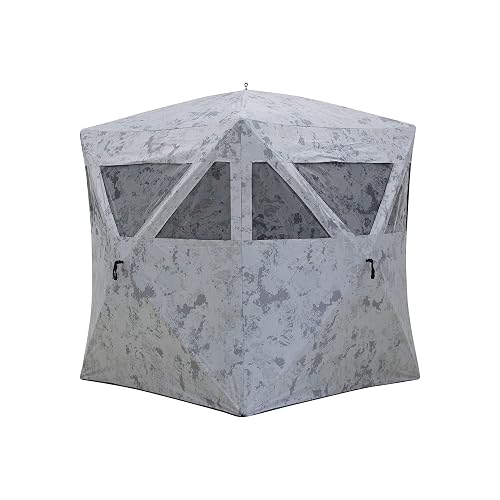
Shopping for one? See our guide: Bow Hunting Box Blind: 5 Best Picks for Deer Hunters (2026).
Step 2: Plan Your Shot Windows Before You Frame
Map your shooting lanes on paper before cutting any lumber. Stand inside the spot where the blind will sit and mark the two or three directions you expect deer to approach from. Shooting windows should be placed on those sides, with the bottom edge at about seat height plus 12 to 18 inches so you can see the ground and still draw. Window placement is covered in more detail in Bow Hunting Blind Windows: 6 Steps to Shoot Clean From Your Blind.
Step 3: Frame and Sheath the Structure
Build a level base, then frame walls on 16-inch centers. Keep the openings you planned in Step 2 intact, and add headers over each window so the frame stays rigid. Sheath with plywood or OSB, then add a roof that slopes slightly for runoff. Blinds that sway or creak in wind will spook deer, so brace corners and screw rather than nail where possible.
Step 4: Finish for Sound, Shadow and Scent
Deer pick up motion and sound at close range, so the interior needs to be as quiet as the exterior. Use soft liners or carpet on the floor and avoid bare metal hardware where you will lean or draw. Paint the inside a dark, flat color to cut reflection. Keep the build quiet to avoid spooking deer before you ever draw. Our Bow Hunting Blind Build: 7 Steps to a Quiet, Shootable Setup guide covers sound control in more depth.
Step 5: Plan Entry and Exit Routes
Enter and leave the blind the same way every time, ideally from a direction that keeps you downwind of the feeding area. Clear a narrow path and keep it free of brush so you can move without noise. A door on the back or side, sized to clear your bow, keeps you out of sight during the approach.
Step 6: Test the Blind Before Season
Sit in the blind for at least an hour on a calm day and check every window. Confirm that you can draw and reach your anchor point on each shooting lane without your limbs hitting the frame. Have a helper walk the expected approach path and note where the sightlines break. Make adjustments now, not when a buck is 20 yards out.
Recommended gear
- Bow hanger hooks: Keep your bow within reach and off the floor so you can draw without shuffling. View on Amazon
- Blind carpet or floor liner: Dampens footfalls and seat movement inside the structure. View on Amazon
- Window shade cloth: Breaks up outline and reflection on shooting windows. View on Amazon
Tips and Common Mistakes
- Do not place windows too high; deer at close range will see your head movement through a high opening.
- Avoid building on a ridge top where the silhouette stands out against the sky.
- Skip reflective hardware and light-colored interiors that show movement.
- Check local rules before building, since some states and public lands restrict permanent blinds. Consult the wildlife agency for your area.
- Let a new blind settle for a week or two before hunting it, so deer get used to it.
FAQ
What size bow hunting blind is best for one hunter?
A 5×5 or 6×6 foot footprint is a common choice because it allows a full draw and room for a seat and gear. Smaller blinds can work for a single hunter but leave less room for movement.
How high should shooting windows be?
Set the bottom edge of the window roughly 12 to 18 inches above your seated eye line so you can see the ground and still draw. Adjust after testing your draw inside the finished blind.
Do I need a permit to build a hunting blind?
Rules vary by state and by land ownership, and some public areas prohibit permanent structures. Check with your state wildlife agency or land manager before you build.
Conclusion
Good bow hunting blind plans start with your draw length and shooting lanes, then carry those decisions through framing, windows and interior finish. Test the blind before season and make adjustments while there is still time. A blind built this way keeps you hidden, quiet and ready when a deer comes in.
Related reading
Ready to choose one?
About Owen Palmer
Owen Palmer is part of our editorial team and reviews and edits our hunting guides, checking product details against manufacturer specifications and owner feedback.