
 By Owen Palmer
Updated November 2026
A hammered steel hunting knife appeals to hunters who want a blade with a distinctive look and a fixed-blade design they can carry afield. This D2 steel hunting knife with a hammered Damascus-pattern finish, ram horn handle and leather sheath suits hunters who want a 4.5-inch fixed blade for field dressing, skinning and general camp work, and who value a traditional appearance. It is a good fit for buyers who already know how to maintain a high-carbide tool steel edge. It is less suitable for hunters who want a stainless, low-maintenance blade, anyone who needs a large heavy-duty chopper, or buyers who expect a blade that holds a razor edge without regular touch-ups.
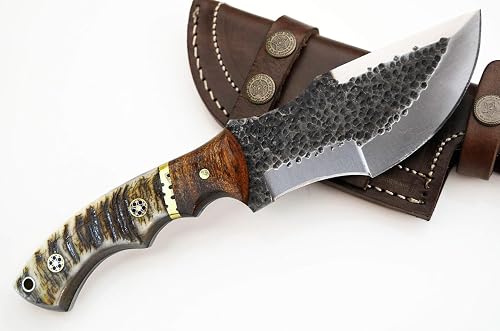
D2 Steel Hunting Knife, Hammered Damascus Pattern, Ram Horn Handle, Leather Sheath (D2 Steel (Hammered), 4.5 inch blade)
Product Overview
This is a fixed-blade hunting knife built around a D2 tool steel blade with a hammered finish designed to resemble Damascus pattern steel. The blade measures 4.5 inches, a length that sits in the middle of the range for field work. It is short enough for detailed cuts such as skinning and trimming, yet long enough for most game processing tasks. The handle is made from ram horn, a natural material that many traditional knife buyers prefer for its grip texture and appearance. The knife ships with a leather sheath for belt carry.
The hammered pattern on the blade is largely cosmetic. It is produced by forging or pressing a textured surface into the steel, and it does not change the underlying composition of the metal. The value of the knife therefore depends on the D2 steel itself, the grind geometry, the handle fit and the sheath quality, rather than on the surface pattern.
Fixed-blade hunting knives like this one are generally carried in a sheath on the belt and used for tasks that require a stable, rigid blade. If you are new to the category, the overview in What Is a Fixed Blade Hunting Knife? Uses, Parts and How to Choose explains the basic components and why a full tang and secure sheath matter.
Key Features & Specifications
The table below lists the specifications named in the product listing. Items not confirmed by the listing are left out.
| Feature | Specification |
|---|---|
| Blade steel | D2 tool steel |
| Blade finish | Hammered, Damascus-style pattern |
| Blade length | 4.5 inches |
| Handle material | Ram horn |
| Included accessory | Leather sheath |
| Knife type | Fixed blade hunting knife |
D2 is a high-carbon, high-chromium tool steel. Manufacturers commonly describe it as offering good wear resistance and edge retention compared with many standard carbon steels, while being less corrosion resistant than stainless grades. Because D2 is harder to sharpen than simpler steels, it rewards owners who learn a consistent sharpening routine. For a broader look at steel behavior, see 1095 Steel Hunting Knife: Edge, Toughness and Field Care Guide.
Pros & Cons
Pros
- D2 tool steel is widely regarded as a wear-resistant option for a working hunting blade.
- The 4.5-inch blade length suits skinning, trimming and general field tasks.
- Ram horn handles offer a traditional look and a textured grip that many owners find secure when wet.
- The hammered finish gives the blade a distinctive appearance that some buyers prefer to plain finishes.
- The leather sheath allows belt carry and keeps the blade protected between uses.
Cons
- D2 is less corrosion resistant than stainless steel and needs drying and oiling after field use.
- Sharpening D2 takes more time and patience than sharpening softer steels.
- Natural horn handles require care, since prolonged soaking or drying can affect the material.
- The hammered finish is cosmetic and should not be mistaken for a performance feature.
- Leather sheaths can stiffen or stretch over time, so fit should be checked periodically.
Performance Analysis
Performance in a hunting knife comes from a combination of steel hardness, edge geometry, handle ergonomics and sheath retention. D2 tool steel is generally hardened to a level that supports good edge retention, meaning the blade keeps its cutting ability through a longer stretch of work before needing touch-up. In practice, owners of D2 knives often report that the edge holds through skinning and processing a game animal, though the exact result depends on the grind and the sharpening technique used.
The 4.5-inch blade is a practical length for most of the tasks a hunter performs. It gives enough reach for opening a body cavity and enough control for detailed work around joints and silver skin. Owners who use shorter blades for precision and longer blades for heavy cutting may find this length a reasonable compromise.
Ram horn handles are commonly praised for grip, particularly when the surface is left with its natural texture. Some owners note that horn can feel slightly less secure than rubberized or micarta handles when blood or fluid is present, so a firm grip and careful handling are advisable. Handle fit and the shape of the bolster or guard should be inspected on arrival, as these details vary between batches of hand-finished knives.
Corrosion is the main long-term concern. D2 is not stainless, so the blade should be wiped dry and given a light coat of oil after exposure to moisture, blood or game juices. Owners who neglect this step commonly report surface rust forming within days in humid conditions. Routine care prevents most of this problem.
The leather sheath is adequate for belt carry in typical hunting use. Retention depends on how well the sheath fits the blade and how it has been conditioned. Checking the fit before a hunt and resealing or conditioning the leather when it dries out will keep the knife secure and accessible.
For sharpening guidance, many hunters aim for a consistent angle on each side of the edge. The article What Angle to Sharpen Hunting Knife: 20 Degrees Per Side for Field Edges (2026) covers how to set and maintain that angle, which matters a great deal with a harder tool steel like D2.
Who Should Buy This Product?
This knife is a sensible choice for hunters who want a traditional-looking fixed blade with a durable tool steel edge and are willing to maintain it. It suits big-game hunters who process their own animals and want a single blade for skinning and cutting. It also works for buyers who prefer natural handle materials and a distinctive blade finish.
It is less suitable for buyers who want a low-maintenance knife that can sit in a damp pack without attention. If you field dress in wet weather and do not want to oil the blade after each use, a stainless option will be easier to live with. Buyers who need a heavy chopping tool, or who want a very long blade for large-animal work, should look at other designs. Anyone who wants a folding knife for pocket carry should also consider a different category.
For a comparison of different hunting knife shapes and what each does best, What Does a Hunting Knife Look Like? Parts, Shapes and Key Features offers a useful reference.
Buying Guide
Before buying a hammered steel hunting knife, consider the steel type, blade length, handle material, sheath quality and how you plan to maintain the blade. The hammered finish is a matter of taste, but the steel and grind matter far more for hunting performance.
Steel type
D2 tool steel offers good wear resistance but needs careful drying. Stainless steels resist rust more readily but may not hold an edge as long under heavy use. Carbon steels such as 1095 sharpen easily but rust quickly. Choose based on how you will care for the knife after each hunt.
Blade length
For most field tasks, a blade in the 3.5 to 5 inch range covers skinning, trimming and cape work. Longer blades suit heavy processing but can be less precise. A 4.5-inch blade is a common middle ground.
Handle and sheath
Look for a handle that stays secure when wet, whether it is horn, wood, micarta or rubber-based composite. Check that the sheath holds the blade firmly and covers the edge completely. Leather sheaths should be conditioned periodically.
Alternatives worth comparing
If you want to compare options within the same general style, two well-known fixed blades in the survival and bushcraft category are worth a look. The first is a full tang design with a rosewood handle and leather sheath, suited to camp and outdoor tasks:

Full Tang Survival Feather Knife with Rosewood Handle, Camping Knife for Bushcraft & Outdoor Use, Cool Gifts for Men Purple Dragon Hand Forged Fixed Blade Knife with Leather Sheath
The second is an all-purpose full tang tactical fixed blade with an anti-slip ergonomic handle and sheath, aimed at buyers who want a utility-focused design:

All-Purpose Survival Knives, Long-Lasting Sharpness, Anti-Slip Ergonomic Handle, Easy to Carry Full Tang Tactical Fixed Blade Knife with Sheath, Gift for Men
Both alternatives are fixed blades in the same broad category, so compare blade steel, handle material and sheath quality directly before deciding. For buyers interested in other traditional steels, Damascus Steel Knife Hunting: How to Choose and Use One in the Field is a useful companion read.
FAQ
Is a hammered steel hunting knife the same as a Damascus knife?
Not necessarily. A hammered finish is a surface texture that imitates the look of Damascus steel. True Damascus is made by layering and folding different steels. The hammered pattern on this knife is produced on the surface, so the performance comes from the underlying D2 steel rather than from layered construction.
Does D2 steel rust?
D2 is more corrosion resistant than plain carbon steel but less resistant than stainless steel. It can develop surface rust if left wet or unoiled, so drying and oiling after use is recommended.
How often do I need to sharpen a D2 hunting knife?
Frequency depends on use. Many owners touch up the edge after each hunt or processing session and perform a full sharpening when the edge no longer cuts cleanly. D2 holds an edge longer than many softer steels, so intervals can be longer.
Is the 4.5-inch blade good for field dressing?
For most game sizes, a 4.5-inch blade is adequate for opening the body cavity and making skinning cuts. Very large animals may benefit from a longer blade, while smaller game is easily handled with this length.
Can I use this knife for camp chores as well?
It can handle light camp tasks such as cutting cord, opening packages and preparing food. For heavy chopping or prying, a dedicated tool is a better choice, since the blade is designed primarily for cutting.
How should I care for the ram horn handle?
Wipe the handle dry after use, avoid long soaking, and keep it out of prolonged direct heat. Occasional light oiling helps prevent the material from drying and cracking. If you have specific concerns, check with the manufacturer for care instructions.
Is the sheath good enough for daily carry?
The included leather sheath is suitable for belt carry during hunting trips. Check the fit before each outing and condition the leather regularly. If you carry the knife daily, inspect the sheath for wear and replace it if retention weakens.
Should I consult a professional before using a knife for field dressing?
Field dressing and processing game involve food safety considerations. If you are new to processing game, consider a hunter education course or guidance from an experienced processor or your state wildlife agency.
Final Verdict
This hammered steel hunting knife is a reasonable choice for hunters who want a traditional-looking 4.5-inch fixed blade with D2 tool steel and a ram horn handle. Its strengths are the steel’s wear resistance, a practical blade length and a classic appearance. Its main drawbacks are the maintenance D2 requires and the cosmetic nature of the hammered finish. Buyers who commit to drying and oiling the blade will likely find it a capable field knife. Those who want a stainless, low-maintenance option should look elsewhere.
Before you buy: helpful guides
About Owen Palmer
Owen Palmer is part of our editorial team and reviews and edits our hunting guides, checking product details against manufacturer specifications and owner feedback.




