By Owen Palmer
Updated November 2026
The laguiole en aubrac hunting knife suits hunters who value a traditional folding design, a refined handle and a blade that handles light field chores well. A standard fixed-blade hunting knife is the better pick for heavy work such as skinning, quartering and cutting through tough tissue. Choose based on whether you need a compact everyday carry or a rugged tool you can lean on hard. For a deeper look, Making a Hunting Knife from a File vs Buying One: Which Should You Choose? covers this in detail.
| Criteria | Laguiole en Aubrac | Standard Fixed Blade |
|---|---|---|
| Blade type | Folding, slip-joint style | Fixed, full tang |
| Typical blade length | Roughly 3 to 4 inches | Roughly 3.5 to 5 inches |
| Lockup | Slip joint, no locking liner | Solid, no moving parts |
| Handle | Traditional horn or wood scales | Synthetic, rubber or wood grip |
| Carry | Pocket carry | Belt sheath |
| Best for | Light field chores, daily carry | Skinning, field dressing, heavy cuts |
Blade Design and Strength
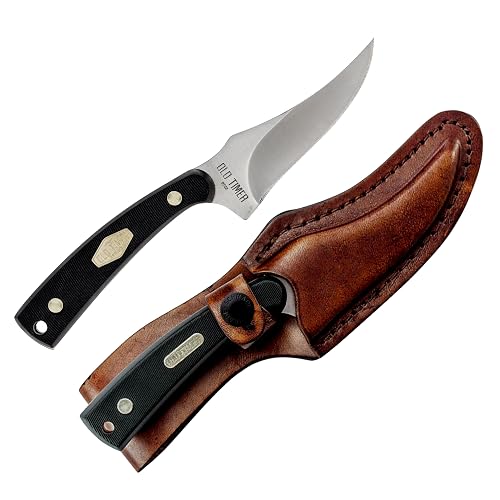
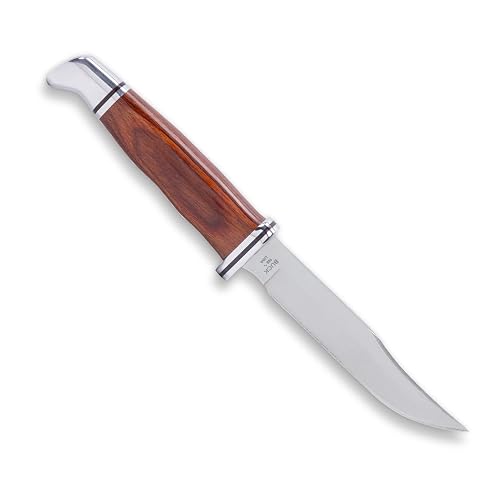
A fixed blade has one clear advantage: there is no joint between the handle and the steel. Manufacturers of full-tang fixed knives typically specify that the steel runs the full length of the handle, which makes them far more stable under downward pressure. The laguiole en aubrac relies on a pivot and a slip joint, so it cannot match a fixed blade for rigidity. Winner: standard fixed blade. You may also like Victorinox Swiss Army Hunting Knife (2026): Which Should You Choose?.
Edge Retention and Sharpening
Edge performance depends more on steel type and heat treatment than on the knife’s form. Owners of both styles often report that a well-finished blade holds an edge through a deer’s worth of cuts, but a fixed blade is easier to maintain in the field because you can strop it without opening anything. Keep a 20-degree-per-side edge for general field work and you will get good results from either design. Winner: tie, with a slight edge to the fixed blade for field maintenance.
Handle Comfort and Grip Control
The laguiole’s horn or wood handle is attractive and sits well in the palm for precise, light cuts such as trimming or opening packaging. For long skinning sessions with wet, gloved hands, a textured synthetic or rubber grip on a fixed blade gives more control and reduces slip. Winner: fixed blade for sustained use, laguiole for fine work.
Portability and Legal Carry
The laguiole folds shut and slips into a pocket, which makes it easy to carry all day and convenient for camp chores. A fixed blade needs a sheath, but it is simple to secure on a belt and quick to draw. Check your state and local rules on blade length and carry before you head out, since some areas restrict fixed blades in certain settings. Winner: laguiole for pocket carry. We also found Hunting Knife with Leg Strap (2026): Which Should You Choose? useful on this point.
Pros & Cons
Laguiole en Aubrac
- Pro: Elegant, traditional design that is comfortable for precise work.
- Pro: Easy to carry in a pocket all day.
- Con: Slip-joint construction is less rigid for heavy cutting.
Standard Fixed Blade
- Pro: Full-tang strength for skinning and quartering.
- Pro: No moving parts to loosen or clean.
- Con: Needs a sheath and is bulkier to carry.
Which Should You Choose?
- Choose the laguiole en Aubrac if you want a pocket knife for camp chores, trimming and light field tasks: View on Amazon
- Choose a standard fixed blade if you process your own game and need a rigid, reliable tool: View on Amazon
For more on blade selection, see Knife for Deer Hunting: A Step-by-Step Guide to Choosing and Using One and Knife Hunting and Fishing (2026): Fixed Blade vs Folding Knife, Which Is Better?. If you carry a fixed blade, Sheath Knife for Hunting: What to Look for and How to Choose covers sheath options.
FAQ
Is the laguiole en aubrac strong enough for skinning deer?
It can handle light skinning and trimming, but its slip-joint design is not built for heavy, repeated cutting. Most hunters prefer a full-tang fixed blade for processing game. Consult an experienced hunting mentor if you are unsure which tool suits your game.
How should I sharpen a folding laguiole blade?
Use a fine stone or ceramic rod at about 20 degrees per side and work the blade gently to avoid damaging the pivot area. Keep strokes controlled and check the edge regularly. For the full method, see Hunting Knife Sharpening Angle: A Step-by-Step Guide for Field-Ready Edges.
Can I carry a laguiole in the field legally?
Pocket knives are generally allowed in most places, but rules vary by state, public land and season. Check your local regulations before you hunt and follow any blade-length limits that apply.
Conclusion
The laguiole en aubrac hunting knife is a strong choice for hunters who want a refined pocket tool for light field work. For skinning, quartering and heavy cutting, a standard full-tang fixed blade remains the more dependable option. Match the knife to the task, and you will be well prepared for the season.
About Owen Palmer
Owen Palmer is part of our editorial team and reviews and edits our hunting guides, checking product details against manufacturer specifications and owner feedback.