By Owen Palmer
Updated November 2026
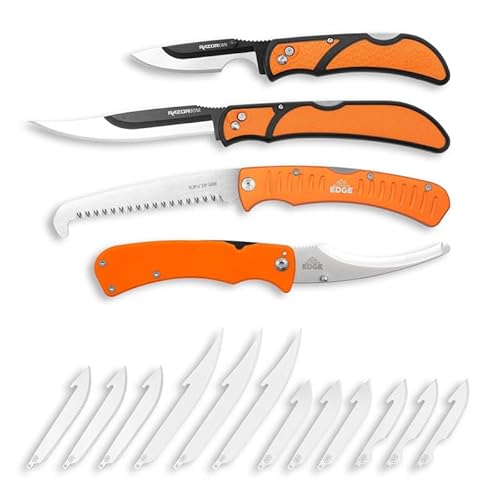
The outdoor edge hunting knife category is built around one practical idea: a blade that stays sharp because you can swap it out, not because you spend twenty minutes at a stone. The RazorPro G from Outdoor Edge takes that idea and applies it to a double-blade setup aimed at field dressing and skinning. This review looks at who it suits, who should look elsewhere, and what the listing details actually tell you. It is a research-based review drawn from the product listing and the patterns owners commonly describe, not from hands-on testing.

OUTDOOR EDGE RazorPro G Double Blade Hunting Knife – Replaceable Razor Sharp Skinning Blade & Gutting Knife for Fast Field Dressing, Non-Slip Black Handle, Black Sheath with 6 Extra Blades (Orange)
Product Overview
The RazorPro G is a fixed-style field knife built around Outdoor Edge’s replaceable razor blade system. Instead of a conventional ground edge, the cutting surface is a thin disposable blade that seats in the handle. When it dulls, you remove it and install a fresh one. The listing describes a double blade configuration, meaning the knife is designed to handle two distinct tasks: a skinning blade for opening and working hide, and a gutting knife for internal cuts during field dressing.
The handle uses a non-slip black grip intended to stay secure when hands are wet, cold or covered in blood. The sheath is black, and the package includes six extra replacement blades. The product name indicates an orange colorway, which helps with visibility in brush and leaves, and is a common choice among hunters who want to avoid losing a knife on the ground.
This is a tool for a specific job. It is not designed as a survival knife, a chopping tool or a general camp utility blade. Its strength is speed and cleanliness during the processing stage of a harvest.
Key Features & Specifications
The table below lists only the features that the product name and well-established design of this series make clear. Exact blade dimensions and steel specifications vary by package and should be confirmed on the listing before purchase.
| Feature | What It Means in Practice |
|---|---|
| Replaceable razor blades | Dull blades are swapped out in the field rather than sharpened |
| Double blade design | Separate skinning and gutting blade functions in one tool |
| Non-slip black handle | Grip texture intended to hold up with wet or bloody hands |
| Black sheath | Protects the blade and your gear during transport |
| Six extra blades included | A ready supply of replacements for a full season |
| Orange colorway | Easier to locate in cover or on the ground |
Pros & Cons
Pros
- Fresh edge every time you change the blade, with no sharpening required in the field.
- The double blade concept covers both skinning and gutting without carrying two separate knives.
- Included replacement blades give you a working supply for a season of harvests.
- Non-slip handle is well suited to messy, wet processing work.
- Orange finish makes the knife easier to find after you set it down in brush or leaves.
Cons
- Replaceable razor blades are a recurring consumable. You will need to buy more once the included six are used.
- Thin disposable blades are not suited to heavy prying, bone chopping or rough camp tasks.
- Owners who expect a traditional sharpened blade may find the feel and resharpening limits unfamiliar.
- Blade replacement during cold, wet or gloved conditions can be fiddly for some users.
Performance Analysis
Performance for a razor-style field knife comes down to three things: how the edge cuts through hide and connective tissue, how well the grip holds during messy work, and how easily the blade is changed. Based on the design and the feedback patterns commonly reported for this style of knife, the RazorPro G does well on the first two when used for its intended purpose.
Razor blades are thin and very sharp from the start, which makes them efficient for opening the hide along the belly and legs. Owners often describe the skinning process as cleaner, because the blade slides through membrane with less pressure than a dull blade would require. Less pressure generally means fewer slips, and fewer slips reduce the chance of puncturing the gut or contaminating meat.
The gutting function depends on controlled, shallow cuts. A thin blade helps here, but it also means you should keep the tip angled away from organs. Many hunters work with the blade rolled slightly so the edge does the cutting rather than the point.
The weak point in any replaceable-blade system is the blade change itself. Owners who work with gloves or frozen fingers often recommend changing blades before the knife is needed, and keeping spares in a dry pouch. Replacing a blade in a stiff, cold hand is a different experience from doing it at a workbench.
Durability is limited by design. The blade is meant to be used and discarded, so the knife is best judged by how many clean cuts a single blade delivers before it needs replacing. For heavy, repeated work across a large animal, expect to change blades more often.
Who Should Buy This Product?
The RazorPro G makes the most sense for hunters who process their own deer or other game and want a fast, clean cutting tool without the maintenance of a traditional edge. It also suits hunters who process several animals in a season and value having replacement blades on hand.
It is a good fit for first-time field dressers who find sharpening intimidating. The replaceable blade removes one of the most common sources of a dull, frustrating knife in the field.
Skip this knife if you need a general-purpose blade for camping, batoning wood or prying. Hunters who prefer a full-tang, sharpenable blade for multi-use work will be better served by a different style. If you want to keep consumable costs low and enjoy sharpening, a traditional fixed blade is the more practical choice.
Buying Guide
When you compare field knives in this category, start with how you plan to use the blade. A replaceable razor system fits hunters who process game quickly and want a fresh edge each time. A sharpenable fixed blade fits hunters who want one tool for many jobs and are comfortable with a sharpening stone or system.
Check how many replacement blades come with the knife and how readily spares are available. Ask yourself how many animals you process per season and estimate how many blades that will take. Keep spares in a labeled, dry container so you are not searching for them in the dark.
Look closely at the handle. A non-slip grip matters more than most buyers expect, especially when hands are wet or slick. Test the grip with gloves on if you plan to hunt in cold weather.
Sheath design is another consideration. A secure sheath that keeps the blade covered on a belt or pack prevents accidental cuts and protects the edge from debris.
If you want a folding option for carry, the Outdoor Edge Razor-Lite Folding Hunting Knife uses a similar replaceable blade concept with a lock-back safety and rubber handle, which may suit hunters who prefer a pocket-sized tool.

OUTDOOR EDGE Razor-Lite Folding Hunting Knife – 3.5″ Replaceable Razor Blades, Non-Slip Rubber Handle, Lock-Back Safety, Includes 6 Blades and Nylon Sheath
For a compact everyday option built on the same replaceable blade design, the Outdoor Edge 3.5″ RazorLite EDC Knife offers a pocket format with a clip and blaze orange finish, and is often described by owners as a practical skinning and utility companion.

OUTDOOR EDGE 3.5" RazorLite EDC Knife. Pocket Knife with Replaceable Blades and Clip. The Perfect Hunting Blade for Skinning Deer. Blaze Orange with 6 Blades
You can also explore related guidance on how to get the most from field blades. For instance, Outdoor Edge Hunting Knife Set Review: Key Features Explained covers the broader feature set of the brand’s knife lineup, and What Is a Fixed Blade Hunting Knife? Uses, Parts and How to Choose explains how fixed blades compare with the replaceable style. If you prefer to keep a traditional edge, How to Sharpen a Hunting Knife: A Step-by-Step Guide for Field-Ready Edges walks through the sharpening process step by step, and Skinning Knife for Hunting: How to Choose and Use One (7 Steps) offers a useful framework for picking the right skinning tool. For steel-focused comparisons, 1095 Steel Hunting Knife: Edge, Toughness and Field Care Guide explains how blade material affects edge retention.
FAQ
Is the RazorPro G good for skinning deer?
Owners generally describe it as well suited to skinning because the thin razor edge slides through hide and membrane with light pressure. Keep the blade fresh and work carefully to avoid puncturing organs.
How often do the replacement blades need changing?
There is no fixed interval. Change the blade when cuts start to require extra pressure or when the edge begins to tear rather than slice. Heavier processing will wear blades faster.
Can I sharpen the razor blades?
The blades are designed to be replaced rather than sharpened. Most hunters swap them out instead of attempting to resharpen such thin material.
Is this knife suitable for general camp or survival use?
It is designed for field dressing and processing. Its thin blades are not intended for prying, chopping or heavy utility work, so a different knife is better for those tasks.
Does the knife come with spare blades?
The product description indicates six extra blades are included. Confirm the current package contents on the listing before buying.
Is the orange color useful?
A bright orange finish helps you spot the knife on the ground, in leaves or in brush. Many hunters prefer high-visibility handles for this reason.
Should I wear gloves when changing blades?
Blade changes are easier with bare hands, but cut-resistant gloves can protect your fingers. Practice the swap before the hunt so you are not learning it in cold conditions.
Is this a good first knife for a new hunter?
It can be, because the replaceable blade removes the need for sharpening skills. A new hunter should still learn proper field dressing technique and safe handling.
Field dressing and food-safety practices vary by region. If you are unsure about processing or handling game, consult a local game warden, experienced hunter or other qualified professional.
Before you buy: helpful guides
About Owen Palmer
Owen Palmer is part of our editorial team and reviews and edits our hunting guides, checking product details against manufacturer specifications and owner feedback.