By Wyatt Hayes
Updated November 2026
A traditional Japanese hunting knife appeals to hunters who value simple, handmade-looking design and a wooden handle over modern synthetic grips. This review covers a wooden-handled traditional Japanese hunting knife sold on Amazon, based on its listing details, typical specifications for this knife style, and patterns reported by owners. It suits hunters who want a compact, classic fixed blade for field dressing, small game and general camp chores, and who are comfortable with careful maintenance. It is less suitable for hunters who need a heavy chopping tool, a knife with a lifetime warranty backed by a large manufacturer, or a blade they can leave wet and untended for long periods. Because the listing gives limited hard specifications, some details below are described by knife type rather than confirmed measurements.

Japanese traditional style Japanese traditional wooden-handled hunting knife 日本の狩猟ナイフ
Product Overview
The product under review is listed as a Japanese traditional style hunting knife with a wooden handle, also labeled in Japanese as a Japanese hunting knife. Knives in this category usually follow one of several historical patterns, such as the tanto, a short straight-edged blade with a strong point, or the drop-point and clip-point shapes adapted for field work. The wooden handle is the defining visual feature, and it is the element most owners mention first when describing the knife.
Traditional Japanese hunting and utility knives were built for practical use in forestry, fishing and farm work. They tend to have a relatively thin, hard edge, a handle that fills the hand without a bulky guard, and a sheath or cover for transport. This product follows that general approach. Buyers should expect a fixed blade designed for cutting and skinning rather than prying or batoning, and a look that leans toward heritage rather than tactical styling.
The knife is sold as a single item through Amazon US. Availability, bundled accessories and exact finish can change between listings, so check the current listing photos and description before ordering. Wooden handles also respond to moisture and temperature, which is worth keeping in mind for a hunting tool used outdoors in changing weather.
Key Features & Specifications
The table below lists features that are either stated in the product name or are standard for this knife style. Exact blade length, steel grade and overall weight vary by maker and should be confirmed on the listing page before purchase.
| Feature | Details |
|---|---|
| Knife type | Fixed blade, traditional Japanese hunting style |
| Handle material | Wood |
| Design style | Japanese traditional |
| Primary use | Hunting, field dressing, general outdoor cutting |
| Blade type | Fixed, single edge (typical for this style) |
| Carry | Sheath or cover (confirm whether included) |
| Blade length and steel | Check listing; not confirmed in this review |
Pros & Cons
Pros
- Wooden handle offers a traditional look and a grip many users find comfortable in wet or cold conditions.
- Fixed blade construction is generally more secure for skinning and field dressing than a folding knife.
- Traditional Japanese styling appeals to collectors and hunters who prefer heritage designs.
- Typically a compact size that is easy to carry on a belt or in a pack.
- Simple design with fewer parts to fail or loosen compared with multi-tool knives.
Cons
- Wooden handles need periodic oiling and can swell, crack or loosen if left wet or stored in heat.
- Limited detail in the listing about blade length and steel, which makes performance comparisons harder.
- Not designed for heavy chopping or prying, so it is the wrong tool for bone-heavy or large-game work without a companion knife.
- Owners often report that traditional blades need regular honing to stay sharp, especially with harder steels.
- Sheath quality and retention can vary, so buyers should check the carry setup before relying on it afield.
Performance Analysis
Performance for a knife like this depends on three things: the blade geometry, the steel and the handle fit. Thin, relatively straight blades in the traditional style slice cleanly through hide and muscle with light pressure, which is why they are often preferred for skinning. The tradeoff is that a thinner edge can chip if used to pry or to cut through bone, so most experienced users keep this type of knife for soft-tissue work and use a heavier tool for joints.
Owner feedback patterns for wooden-handled traditional knives tend to focus on three points. The first is grip comfort: many users describe the wood as warm and secure when hands are damp, though some find smooth wood slippery with blood or fat unless they add a grip wrap or use the lanyard hole if present. The second is edge retention: traditional hard steels can hold an edge well but require a sharpening routine, and owners generally recommend a stone or ceramic rod kept on hand. The third is handle durability: wood needs oiling, typically with a food-safe or lightly applied oil, and should be dried after washing rather than left in a wet sheath.
Field use also depends on the user. A hunter who skins a few deer a season and keeps the knife clean and oiled will likely see a long service life. A hunter who leaves it in a damp pack or uses it for chopping kindling will probably see handle and edge problems sooner. Because the exact steel and blade length are not confirmed here, treat these observations as general patterns for the knife type rather than measured results.
Who Should Buy This Product?
This knife suits hunters who want a classic, compact fixed blade for skinning, field dressing and light camp tasks, and who appreciate a traditional look. It also suits collectors and gift buyers who want a knife with cultural character. Hunters who already own a dedicated skinning knife may use this as a secondary blade or as a backup.
It is a weaker choice for buyers who need a heavy-duty chopper, a knife for processing large game with lots of bone contact, or a fully weatherproof tool that can be left wet. Buyers who want a detailed warranty, clearly stated steel specifications or a wide range of sheath options may also prefer a different model. Anyone using a sharp fixed blade in the field should be trained in safe handling; for questions about hunting regulations, knife laws in your state, or field dressing methods, consult your state wildlife agency or an experienced mentor.
Buying Guide
When shopping for a traditional Japanese hunting knife, start with the use case. If you mostly skin and field dress, a blade in the moderate length range with a clean, slightly curved edge is usually easier to control than a long, straight tanto. If you also process game in camp, consider a companion knife with a thicker spine for light chopping.
Check these points before buying:
- Blade length and shape. Confirm the length on the listing. Shorter blades offer more control for detail work, while longer ones cover more ground when skinning large animals.
- Steel type. Look for the steel grade named in the listing. Harder steels hold an edge longer but are harder to sharpen in the field.
- Handle construction. Confirm the handle is attached with a full tang or a secure pin system. Wood-handled knives should show clean joinery without gaps.
- Sheath and carry. Check whether a sheath is included, what it is made from, and whether it retains the knife when you bend or run.
- Maintenance needs. Plan on a sharpening stone, a light oil for the wood and blade, and a dry storage spot.
Well-known alternatives in the same general category include the following, which may suit buyers who want a different style or more detailed specifications:
Higo no Kami 10 Pocket Knife by Nagao Seisakusho, Brass Finish is a traditional Japanese pocket knife with a brass finish, better suited to everyday carry and light tasks than heavy field dressing.
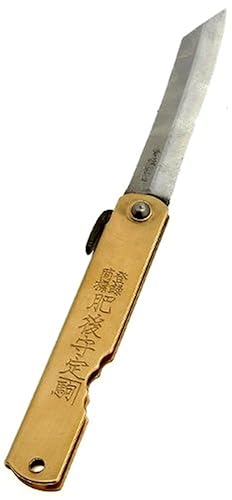
Higo no Kami 10 Pocket Knife by Nagao Seisakusho, Brass Finish
Tanto Knife with Wooden Sheath (forged from a single piece of D2 steel, full tang walnut handle) is a fixed blade with a walnut handle and wooden sheath, a close match in handle style and a useful option for buyers who want a fixed blade with a sheath included.

Forged from a Single Piece of D2 Steel, Full Tang Walnut Handle, Wooden Sheath, Gift Box Japanese Fixed Blade Knife – Tanto Knife with Wooden Sheath
For more on choosing a fixed blade for field work, see Folding vs Fixed Blade Hunting Knife (2026): Which Is Better for Field Use? and Skinning Knife for Hunting: How to Choose and Use One (7 Steps). Sharpening is covered in Hunting Knife Sharpening Angle: A Step-by-Step Guide for Field-Ready Edges.
FAQ
Is a traditional Japanese hunting knife good for skinning deer?
Yes, a thin fixed blade of this type is generally well suited to skinning because it cuts cleanly through hide with light pressure. Keep the edge sharp and avoid using the tip to pry, since that is where thinner blades are most likely to chip.
How do I care for a wooden knife handle?
Wash the knife and dry it fully after each use. Apply a light coat of food-safe or mineral-based oil periodically, and do not store the knife in a wet sheath. Heat and prolonged moisture are the main causes of cracking and loosening.
Can I use this knife for processing bone or joints?
It is best used for soft tissue. For cutting through joints or bone, a heavier tool such as a dedicated boning or chopping knife is safer for both the blade and the user.
What steel is best for a traditional hunting knife?
There is no single best steel. Harder steels keep an edge longer but take more effort to sharpen, while softer steels are easier to maintain in the field. Choose based on how often you hunt and how much sharpening you are willing to do.
Do I need a sheath with a fixed blade hunting knife?
Yes, a sheath protects the edge and your gear and keeps the blade secure when you move through brush. Check that the sheath retains the knife securely and has a belt loop or attachment that suits how you carry.
Is a Japanese hunting knife legal to carry?
Knife laws vary by state, county and city, and some areas restrict blade length or concealed carry. Check your state and local regulations, and consult your state wildlife agency for hunting-specific rules.
How often should I sharpen a traditional hunting knife?
Hone the edge briefly after each use if you can, and sharpen on a stone when you notice drag or reduced cutting performance. Frequency depends on how much you use the knife and what you cut.
Final Verdict
Recommended for hunters who want a classic fixed blade
This traditional Japanese hunting knife with a wooden handle is a sound choice for hunters who want a compact, heritage-style fixed blade for skinning and field dressing. Its strengths are the grip, the traditional design and the fixed-blade security. Its limits are the thin edge, the wood handle maintenance and the lack of detailed steel and blade specifications in the listing. Confirm those details, plan on regular oiling and sharpening, and pair it with a heavier tool for bone work. Buyers who want full specification transparency or a robust chopping tool should look at the alternatives above.
Related reading
- Tramontina Brazil Hunting Knife: 7 Best Picks Compared (2026)
- Sharps Cutlery Hunting Knife: A Step-by-Step Guide to Choosing One (2026)
- North American Hunting Club Knife Prices: What to Expect in 2026

About Wyatt Hayes
Wyatt writes about hunting. Each guide starts with research into how products are built and what owners report after months of use, and is revised when better options appear.