
 By Wyatt Hayes
Updated November 2026
Choosing the best backpacking hunting knife means balancing three things that pull against each other: weight, blade strength and the ability to handle real field work like skinning and quartering a deer. A knife that rides comfortably on a 40-mile pack trip may not have the blade length to open a large animal, and a heavy full-size fixed blade can become dead weight by the second day. The picks below were compared on blade steel and thickness, overall length, handle design, sheath and carry options, and the patterns owners commonly report after field use. Each one suits a different kind of trip, so read the “Best for” line before you buy.
Our top picks at a glance
- 1
 TOP CHOICEBest overallMorakniv COMPANION SView on Amazon
- 2
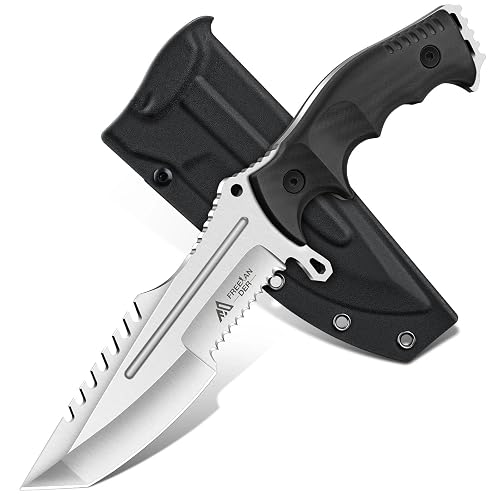 TOP CHOICEBest for full-tang durabilityOutdoor Survival Knife with Ergonomic Handle (D2 Steel, Full Tang)View on Amazon
- 3
 TOP CHOICEBest for game processingMOSSY OAK Fixed Blade Hunting Knife Set – 2 PieceView on Amazon
- 4
 Best for a survival-focused packMossy Oak 15-inch Survival Knife with SheathView on Amazon
- 5
 Best for skinning on the moveOUTDOOR EDGE 3.5" RazorLite EDC KnifeView on Amazon
- 6
 Best lightweight folding pickCIVIVI Mini Praxis Folding Pocket Knife (2.98-inch D2 Blade)View on Amazon
- 7
 Best budget tactical folderSmith & Wesson Extreme Ops SWA24S Tactical Folding KnifeView on Amazon
Quick note on method: these recommendations come from published manufacturer specifications, brand reputation and recurring owner feedback. We did not run lab or field tests on any of them.
Our Top Picks
| Product | Best for | Key feature |
|---|---|---|
| Morakniv COMPANION S | Light fixed-blade all-round use | Swedish 12C27 stainless blade |
| Outdoor Survival Knife with Ergonomic Handle | Heavy-duty camp and field chores | Full tang, D2 steel |
| MOSSY OAK Fixed Blade Hunting Knife Set | Game processing | Straight edge and gut hook blades |
| Mossy Oak 15-inch Survival Knife | Survival-oriented packs | Full tang with sharpener and fire starter |
| OUTDOOR EDGE RazorLite | Skinning with replaceable blades | Replaceable blade system |
| CIVIVI Mini Praxis | Weight-sensitive carry | Compact folder with D2 blade |
| Smith & Wesson Extreme Ops SWA24S | Budget folding carry | Serrated clip point, liner lock |
Morakniv COMPANION S
Swedish stainless steel 12C27 Morakniv COMPANION S – STAINLESS STEEL KNIFE – MILITARY GREEN
Best for: Light fixed-blade all-round use
This is a good fit for hunters who want a simple, dependable fixed blade that won’t add much to the pack. It suits day trips and short overnight hunts where the knife is used for field dressing, cutting cord and food prep.
Key specs
- Swedish 12C27 stainless steel blade
- Fixed blade with a polymer handle
- Includes a sheath
Pros
- Light and easy to carry on the hip or pack strap
- Stainless steel blade resists corrosion in wet conditions
- Simple design that is easy to sharpen in the field
Cons
- Shorter blade is less suited to large animals
- Sheath retention can feel minimal to some owners
Bottom line: The most balanced choice here for hunters who value weight savings and reliable everyday performance more than blade length.
Outdoor Survival Knife with Ergonomic Handle (D2 Steel, Full Tang)
Outdoor Survival Knife, Bushcraft Knife with Ergonomic Handle, Camping Knife for Men Fixed Blade Knife D2 Steel, Full Tang Hunting Knife with Sheath
Best for: Heavy-duty camp and field chores
Hunters who expect to baton wood, process larger game or do camp work with the same knife will value the full-tang construction. It is heavier than a compact folder, so it suits trips where carrying weight is less of a concern.
Key specs
- D2 tool steel blade
- Full tang construction
- Ergonomic handle with sheath included
Pros
- Full tang adds strength for heavier cutting tasks
- D2 steel generally holds an edge longer than basic stainless blades
- Handle is designed to reduce hand fatigue during extended use
Cons
- Heavier than most pack-focused fixed blades
- D2 steel is harder to sharpen by hand than softer steels
Bottom line: A strong pick for hunters who want one knife that handles both game processing and camp chores.
MOSSY OAK Fixed Blade Hunting Knife Set – 2 Piece
Full Tang Handle Straight Edge and Gut Hook Blades Game Processing Knife MOSSY OAK Fixed Blade Hunting Knife Set – 2 Piece, Sheath Included
Best for: Game processing
This set suits hunters who want dedicated tools for different jobs. The gut hook and straight edge blades make field dressing and skinning more organized, and the included sheath keeps both knives protected in the pack.
Key specs
- Two-piece fixed blade set
- Full tang handle design
- Straight edge and gut hook blades; sheath included
Pros
- Gut hook blade is useful for opening the abdominal cavity
- Two blades allow separate tools for different tasks
- Sheath included for organized carry
Cons
- Two knives add weight and bulk to a minimal pack
- Gut hook is a specialized tool with less general-purpose use
Bottom line: Best for hunters who will process game in the field and want a dedicated setup for that job.
Mossy Oak 15-inch Survival Knife with Sheath
Full Tang Bowie Knife, Sharpener & Fire Starter Include, Tactical Knife Perfect for Hunting, Camping, Survival, Outdoor Mossy Oak 15-inch Survival Knife with Sheath, Fixed Blade Hunting Knife
Best for: Survival-oriented packs
Hunters who also want emergency capability will like the add-on features. The sharpener and fire starter built into the sheath make it more of a multi-function kit than a single-purpose blade.
Key specs
- 15-inch overall length
- Full tang bowie-style fixed blade
- Sheath includes sharpener and fire starter
Pros
- Built-in sharpener and fire starter add emergency value
- Long blade offers reach for larger cutting tasks
- Full tang construction supports heavier use
Cons
- Long overall length makes it awkward for compact packs
- Bowie-style blades are less precise for detailed skinning
Bottom line: A good choice for hunters who want a survival-oriented blade and are willing to carry the extra length.
OUTDOOR EDGE 3.5″ RazorLite EDC Knife
OUTDOOR EDGE 3.5" RazorLite EDC Knife. Pocket Knife with Replaceable Blades and Clip. The Perfect Hunting Blade for Skinning Deer. Blaze Orange with 6 Blades
Best for: Skinning with replaceable blades
This is a practical option for hunters who want a light, disposable-blade tool for skinning. Owners often report that swapping a blade in the field is faster than resharpening a conventional blade mid-trip.
Key specs
- 3.5-inch replaceable blade
- Pocket knife with clip
- Package includes multiple replacement blades
Pros
- Replaceable blades keep the cutting edge fresh on long trips
- Very light and easy to clip inside a pocket or pack
- Blaze orange finish improves visibility
Cons
- Small blade is not suited to heavy chopping or large cuts
- Ongoing blade replacement adds a recurring cost to carry supplies
Bottom line: Best for hunters who prioritize fast blade changes and light skinning work over a single heavy-duty knife.
CIVIVI Mini Praxis Folding Pocket Knife (2.98-inch D2 Blade)
G10 Handle with Pocket Clip, Safety Liner Lock, Small EDC Knife for Camping Hiking Survival C18026C-1 CIVIVI Mini Praxis Folding Pocket Knife, 2.98" D2 Steel Blade, OD Green
Best for: Weight-sensitive carry
Ultralight hunters who count every ounce may prefer a compact folder. It is best as a secondary blade or for small jobs rather than as the only knife on a multi-day hunt.
Key specs
- 2.98-inch D2 steel blade
- G10 handle with pocket clip
- Safety liner lock
Pros
- Compact and light for minimal carry
- D2 steel blade offers good edge retention for its size
- Liner lock adds a measure of safety when open
Cons
- Short blade limits use on larger game
- Folding mechanism requires regular cleaning in grit-heavy conditions
Bottom line: A strong backup or minimalist choice, not a primary field-dressing knife for big game.
Smith & Wesson Extreme Ops SWA24S Tactical Folding Knife
3.1" Serrated Clip Point Blade, Black Oxide High Carbon Stainless Steel, Alumnium Handle, Liner Lock Smith & Wesson Extreme Ops SWA24S Tactical Folding Knife
Best for: Budget folding carry
This folder suits hunters who want a serrated clip point blade at a budget-friendly level. The black oxide finish and aluminum handle are aimed at durability in rough field conditions.
Key specs
- 3.1-inch serrated clip point blade
- Black oxide high carbon stainless steel
- Aluminum handle with liner lock
Pros
- Serrated edge helps with rope and tough material
- Liner lock provides a secure open position
- Corrosion-resistant black oxide finish
Cons
- Serrations are harder to sharpen in the field
- Short blade is less suited to heavy skinning on large animals
Bottom line: A sensible budget choice for hunters who want a folder with a serrated edge for utility work.
Buying Guide
Blade length and overall weight
For field dressing deer-sized game, most hunters find a blade in the 3.5 to 4.5-inch range comfortable for detail work, with a longer blade helpful for larger cuts. Weigh your total pack carefully; every ounce matters on a multi-day route.
Good picks for this: Morakniv COMPANION S, CIVIVI Mini Praxis
Blade steel and edge retention
Stainless steels like 12C27 resist rust and are easy to sharpen. Tool steels such as D2 generally hold an edge longer but require more deliberate sharpening. Choose based on how much maintenance you’re willing to do in the field.
Good picks for this: Outdoor Survival Knife with Ergonomic Handle, Morakniv COMPANION S
Full tang vs. partial tang
A full tang runs the blade steel through the entire handle, which generally improves strength for heavy cutting. Partial tang designs save a little weight but are less robust for chopping or prying.
Good picks for this: Mossy Oak 15-inch Survival Knife, MOSSY OAK Fixed Blade Hunting Knife Set
Sheath quality and carry position
A secure sheath with retention is essential on a pack or belt. Check that the sheath fits the blade snugly and offers a positive retention strap or snap. Consider where you will carry it: hip, chest or pack strap.
Good picks for this: MOSSY OAK Fixed Blade Hunting Knife Set, Mossy Oak 15-inch Survival Knife
Handle comfort and grip
Handles with texture or contours help maintain grip when hands are wet, cold or bloody. Test how the handle feels in a reverse grip for skinning and a forward grip for cutting.
Good picks for this: Outdoor Survival Knife with Ergonomic Handle, CIVIVI Mini Praxis
Folding vs. fixed blade for backpacking
Fixed blades are generally stronger and easier to clean. Folders are lighter and more compact but need a secure locking mechanism and regular cleaning. Many backpackers carry one of each.
Good picks for this: Smith & Wesson Extreme Ops SWA24S, OUTDOOR EDGE RazorLite
Maintenance and sharpening in the field
Carry a compact sharpener or stone and a small cleaning kit. Simple blades are easier to touch up on trail, while replaceable-blade systems let you swap rather than sharpen. Keep blades dry and lightly oiled to prevent corrosion.
Good picks for this: OUTDOOR EDGE RazorLite, Morakniv COMPANION S
FAQ
What is the best blade length for a backpacking hunting knife?
Many hunters find a 3.5 to 4.5-inch fixed blade a good balance for field dressing and light camp tasks. Longer blades offer more reach but add weight and bulk to a pack.
Is stainless steel or tool steel better for a hunting knife?
Stainless steel is easier to maintain and resists rust, while tool steels like D2 generally hold an edge longer. The right choice depends on how often you can sharpen and how you plan to maintain the blade.
Should I carry a folding knife or a fixed blade on a backpacking trip?
Fixed blades are typically stronger and simpler to clean, which suits heavier processing work. Folders save weight and space and work well as a backup. Many hunters carry one of each.
Do I need a full tang knife for field dressing?
A full tang is not strictly required for field dressing, but it generally provides more strength if you chop, pry or process larger game. Partial-tang designs can work for lighter tasks.
How should I carry a hunting knife on a backpack?
Use a sheath with secure retention and attach it to a hip belt or shoulder strap where you can reach it quickly. Keep the blade covered when moving through brush to avoid injury.
How do I keep a hunting knife from rusting on a trip?
Wipe the blade dry after use, store it in a dry sheath and apply a light coat of food-safe or gun oil if the trip is humid. Stainless steel resists rust better, but no blade is immune.
Is a knife sharpener necessary on a backpacking trip?
For multi-day hunts, a small sharpener or stone helps you keep the edge working. Replaceable-blade systems reduce the need for field sharpening but require carrying spare blades.
Conclusion
The best backpacking hunting knife depends on the trip. For a single, versatile fixed blade with a light footprint, the Morakniv COMPANION S is a sound starting point. Hunters who want more strength for heavier chores should look at the full-tang Outdoor Survival Knife. For dedicated game processing, the MOSSY OAK two-piece set offers the most specialized tools, while the CIVIVI Mini Praxis and the Smith & Wesson folder suit those who want a lighter secondary carry. Match the knife to your weight limit, the size of game you expect to process and how much maintenance you’re willing to do on trail.
Sources
- Guidance on safe handling of game and food safety in field processing (cdc.gov)
- Backcountry travel and wilderness safety recommendations (nps.gov)
- Regulations and best practices for hunting and carrying tools in the field (fws.gov)
Related reading
- Tramontina Brazil Hunting Knife: 7 Best Picks Compared (2026)
- Kentucky Cutlery Company Hunting Knife: 7 Best Picks Compared (2026)
- Kentucky Cutlery Company Hunting Knife with Sheath: 6 Best Picks (2026)
- How to Close a Hunting Knife: 7 Best Folding Hunting Knives Compared (2026)

About Wyatt Hayes
Wyatt writes about hunting. Each guide starts with research into how products are built and what owners report after months of use, and is revised when better options appear.




