By Owen Palmer
Updated November 2026
Building your own deer blind lets you match the terrain, control the layout and spend your money where it matters. The best DIY hunting blind ideas share three traits: they break up your outline, they keep movement inside a shooting window and they can be assembled with basic tools. This guide covers six builds, how to choose one and the mistakes that cause deer to spot a blind before you ever draw.
Choose a Blind Style That Fits Your Cover
Start with the land, not the lumber. A blind that disappears in a hardwood ridge will stand out in an open cut field. Look at where deer travel, where the wind comes from and how much natural brush you can use. Many hunters also check local regulations before building, since some areas restrict permanent structures on public land. Our overview of Wisconsin Hunting Blind Rules: What You Can and Can’t Do (2026) shows how state rules can shape what you put up. We also found Hunting Blind Heater Ideas: 6 Safe Ways to Stay Warm on Deer Stands useful on this point.
Shopping for one? See our guide: 6 Best DIY Hunting Blind Heaters for Cold-Weather Deer Sits.
Six DIY Blind Ideas Worth Building
Pallet blind
Stack shipping pallets two or three high and fill the gaps with cut brush or burlap. It is quick, portable and easy to adjust if you move the setup. If you want more background, see Bow Hunting Blind Plans: 6 Steps to Build a Quiet, Shootable Blind.
Hay bale blind
Square bales stacked around a shooting lane give natural cover that deer ignore. Leave one side open for your shooting lane and keep the top at least a foot above your seated head height. We also found Deer Hunting Blind Ideas: 7 Practical Builds for Every Budget useful on this point.
Ground blind frame
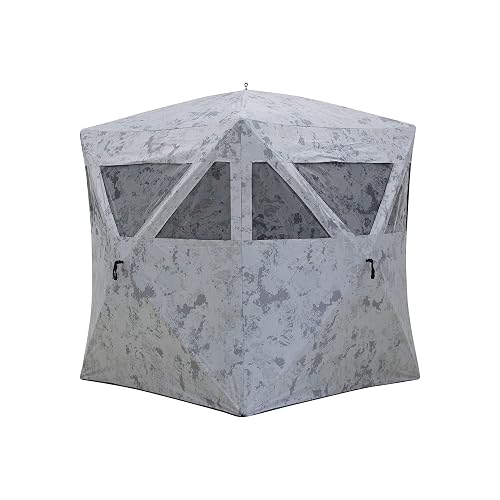
Build a PVC or 2×2 lumber frame, cover it with camo netting and add a door flap. This design works well in thick cover where you need to pop up quietly.
Plywood box blind
A small plywood box on skids or posts offers the most protection from weather. Add a window cut to your shooting angle and close it with a sliding panel.
Tree-fort style blind
Elevated platforms built between two trees give a high vantage point and keep your scent above the ground. Always use fall-protection and confirm the trees can carry your weight and the structure.
Brush-and-cedar blind
Weave cut cedar or fallen brush around a simple frame. It costs little and blends naturally, though it needs refreshing as leaves drop.
Build Checklist
- Scout deer trails and mark the wind direction for the morning and evening.
- Choose a site 15 to 25 yards from the trail, with a clear shooting lane.
- Gather lumber, fasteners, camo netting and a cordless drill with a saw.
- Build the frame first, then add cover, keeping the front and windows matched to your lane.
- Place the blind at least two weeks before opening day so deer adjust.
Common Mistakes
- Building too close to a trail, which puts deer within sight and smell range.
- Using shiny hardware or bright tarps that catch light.
- Skipping a window test: sit inside and check what you can see and what can see you.
- Ignoring wind, which carries your scent straight to the approach.
- Leaving the site untouched after building, so the trampled path gives you away.
Recommended Gear
- Camo burlap or mesh netting: helps break up a hard edge and works on any frame. View on Amazon
- Cordless drill and driver kit: speeds up frame assembly and pre-drilling. View on Amazon
- Cable ties and zip ties: secure brush and netting without visible hardware. View on Amazon
FAQ
Do I need a permit to build a DIY hunting blind?
It depends on the land and your state. Check with the managing agency before building on public land, since some prohibit permanent structures.
What is the best material for a beginner?
Pallets and burlap are the easiest to source and assemble. They let you test placement before investing in heavier lumber. You may also like Hunting Blind Platform Plans: Build a Stable Deer Stand Step by Step.
How far should a blind be from the deer trail?
Most hunters place the blind 15 to 25 yards from the trail, which gives a comfortable shot while limiting the chance of being winded.
Conclusion
The right DIY blind depends on your cover, wind and how long you plan to sit. Start with a simple build, test it before the season and refine the cover as the leaves change. A well-placed blind you built yourself will often outperform a store-bought one.
Related reading
- Wood Stove for Hunting Blind: 7 Safety Steps for Warm Deer Season Sits
- Wisconsin Hunting Blind Rules: What You Can and Can't Do (2026)
- Window for Hunting Blind: How to Choose and Install the Right One
Ready to choose one?
About Owen Palmer
Owen Palmer is part of our editorial team and reviews and edits our hunting guides, checking product details against manufacturer specifications and owner feedback.