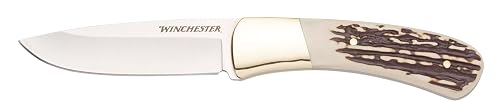
By Owen Palmer
Updated November 2026
The buck 120 hunting knife is a fixed-blade knife that Buck Knives has built around a clip point blade, a full tang and a phenolic handle, all made in the USA. It is aimed at hunters who want a dependable, no-frills knife for field dressing, skinning and general camp work without paying for a premium steel or a custom grind. It suits first-time buyers, hunters building a basic kit and anyone who values a long-established American brand. It is less suited to people who want a thin, high-end chef-style blade, a folding knife for everyday carry, or a steel that holds an edge for many hours of heavy use without touching a stone.

Buck KnivesStrong Full Tang Design, 7-3/8" Clip Point 420HC Stainless Steel Blade, Fixed Outdoor Knife Made in the USA 120 General Hunting Knife with Sheath, Phenolic Handle, 8.3 oz
Product Overview
The Buck 120 General is one of the longest-running fixed-blade hunting knives in the Buck lineup. The listing describes it as a full tang design with a 7-3/8 inch clip point blade made from 420HC stainless steel, a phenolic handle and a sheath, and it is marketed as a fixed outdoor knife made in the USA. The knife weighs about 8.3 ounces according to the listing, which places it in the mid-weight range for a fixed blade of this size.
The design follows a familiar pattern. A clip point blade gives a relatively thin, controllable tip for detail work, while the spine provides enough mass for light chopping and prying. The full tang means the steel runs through the entire handle, which is the construction most hunters prefer for a knife that will be used on bone, joints and tough hide.
Because it is a general-purpose hunting knife rather than a specialized skinner or a heavy bushcraft blade, the 120 tends to sit in the middle of most hunters’ kits. It handles the field-dressing sequence reasonably well and is easy to carry on a belt with the included sheath, but it is not optimized for any single task.
Key Features & Specifications
The table below lists the specifications named in the product listing. Items not stated in the listing are left out rather than estimated.
| Feature | Specification |
|---|---|
| Brand | Buck Knives |
| Model | 120 General |
| Knife type | Fixed blade hunting knife |
| Blade style | Clip point |
| Blade length | 7-3/8 inches |
| Blade steel | 420HC stainless steel |
| Tang | Full tang |
| Handle material | Phenolic |
| Included | Sheath |
| Product weight | 8.3 oz |
| Country of manufacture | USA |
Two points are worth noting. First, 420HC is a widely used stainless steel that is relatively easy to sharpen in the field, though it does not match the edge retention of higher-alloy steels such as CPM-S30V or S35VN. Second, phenolic handles are durable and light, and they stay usable when wet, but they are less grippy than rubberized or textured wood handles when hands are slick with blood.
Pros & Cons
Pros
- Full tang construction is typically preferred for heavy field work and for prying or chopping small material.
- The 7-3/8 inch clip point blade offers a useful balance of tip control and general cutting length.
- 420HC stainless steel is corrosion resistant and relatively simple to resharpen with common stones and rods.
- Phenolic handles are lightweight, resist moisture and do not absorb fluids the way some wood handles can.
- The knife is made in the USA by a company with a long track record in hunting knives.
- An included sheath means the knife is ready to carry out of the box.
Cons
- 420HC does not hold an edge as long as premium stainless steels under heavy, repeated use.
- Phenolic handles can feel slick when wet or bloody, so a secure grip matters more than with textured handles.
- The sheath is functional but is not described as premium, and owners often replace it with a leather or Kydex option.
- At a little over eight ounces, it is heavier than a light caping knife, which may matter on long pack-in trips.
- A clip point is versatile but not the best shape for dedicated skinning compared with a drop point or a skinner profile.
Performance Analysis
Performance for a knife like this depends on three things: the blade geometry, the steel and how the handle transfers force. The 7-3/8 inch clip point gives enough length to open a body cavity and enough tip to start cuts through hide. The thickness of the spine and the full tang let the knife take the pressure of splitting small joints or cutting through cartilage without flexing, which is the main reason hunters choose a full tang fixed blade over a folding knife.
Owner feedback for Buck fixed blades in this class commonly mentions three patterns. Many users report that the knife cuts cleanly through the standard field-dressing tasks and that it sharpens back to a working edge without much difficulty. A second group notes that edge retention is good for routine camp use but that it needs touch-ups more often during a long day of processing. A third recurring comment concerns handle grip: some hunters prefer to add a lanyard or wrap the handle when hands are wet.
In practical terms, expect the 120 to do most general hunting jobs well. Expect to carry a small sharpening tool and to maintain the edge more frequently than you would with a higher-alloy blade. For a deer-sized animal, most hunters find that a single sharpening pass partway through the job is enough.
Who Should Buy This Product?
This knife makes sense for a hunter who wants one reliable fixed blade for the whole season, who likes the idea of a full tang made in the USA and who does not need premium steel. It is also a good pick for a young hunter or a first-season buyer who wants a knife that is durable enough to abuse a little without a lot of ceremony.
You should probably skip it if you process large volumes of game and want an edge that lasts through a long session, if you prefer a dedicated skinning profile, or if you want a knife that feels premium in the hand. In those cases, a higher-alloy steel or a specialized shape will serve you better.
Buying Guide
Before buying any fixed blade hunting knife, work through a few checks. Start with blade length: for general field dressing, most hunters find a blade between about three and eight inches workable, with longer blades better for larger game and shorter ones easier for detail work. Next, look at steel. Stainless steels like 420HC resist rust and sharpen easily, while higher-alloy steels hold an edge longer but need more care and sharpening skill. Then consider construction. A full tang is the standard for heavy use, and a rat-tail or partial tang is usually fine only for light tasks. Finally, think about the sheath. A secure, retaining sheath matters more than most buyers expect, especially if you hunt in brush or on horseback. For another angle, check out Hammered Steel Hunting Knife Review: Is It Worth It?.
If the Buck 120 does not fit your needs, consider these well-known alternatives in the same family of products. Each is listed by ASIN with its Amazon link.
The Buck 110 Folding Hunter is a popular folding option for hunters who want a locking blade they can carry in a pocket. It uses a 3-3/4 inch clip point in 420HC with a lockback mechanism and an ebony handle with brass bolsters.

Buck Knives3-3/4" Clip Point 420HC Steel Blade, Lockback Design, Ebony Handle with Brass Bolsters, Hunting Knife Made in the USA 110 Folding Hunter Knife with Sheath, Ebony & Brass, 7.2 oz
The Buck 373 Trio is a lightweight folding option with three blades, suited to everyday carry rather than heavy field dressing. Its 420J2 blades and woodgrain handle make it a different kind of tool from the 120.

Buck Knives420J2 Clip, Spey, and Sheepsfoot Blades, Woodgrain Inlay Handle with Nickel Silver Bolsters, Lightweight EDC Folding Knife 373 Trio 3-Blade Folding Pocket Knife, Woodgrain, 1.9 oz
For readers who want a broader view of how fixed blades compare, the Buck 102 Hunting Knife Review: Features and Performance covers another Buck option in detail, and What Is a Fixed Blade Hunting Knife? Uses, Parts and How to Choose explains the construction differences that matter when comparing models.
FAQ
Is the Buck 120 a good first hunting knife?
For many hunters it is a sensible first fixed blade. It offers a full tang, a clip point blade of a practical length and a sheath, and it is made in the USA by a well-known manufacturer. Beginners should still learn basic sharpening, since 420HC is easy to maintain but needs regular attention.
What steel does the Buck 120 use?
The listing specifies 420HC stainless steel. It resists corrosion and sharpens readily in the field, though it does not match the edge retention of higher-alloy steels.
Is the Buck 120 a full tang knife?
Yes, the listing describes it as a full tang design, meaning the steel runs through the handle. This construction is generally preferred for heavy field tasks.
How long is the blade on the Buck 120?
The blade is listed at 7-3/8 inches, which is a clip point profile.
Can the Buck 120 be used for skinning?
It can be used for skinning, as most general hunting knives can, but it is not a dedicated skinner shape. Many hunters who skin frequently pair a general knife with a separate skinning blade.
Does the Buck 120 come with a sheath?
Yes, the listing states that a sheath is included. Some owners choose to upgrade it, but the included sheath is intended to carry the knife ready to use.
How much does the Buck 120 weigh?
The listing gives a weight of 8.3 ounces.
Before you buy: helpful guides
- Cutco Hunting Knife Price: What to Expect and How to Choose the Right Model
- Knife for Deer Hunting: A Step-by-Step Guide to Choosing and Using One
- North American Hunting Club Knife Prices: What to Expect in 2026
- Damascus Steel Knife Hunting: How to Choose and Use One in the Field
- Cutco Serrated Hunting Knife: Which Model to Choose and How to Use It
Related reading
About Owen Palmer
Owen Palmer is part of our editorial team and reviews and edits our hunting guides, checking product details against manufacturer specifications and owner feedback.