By Owen Palmer
Updated November 2026
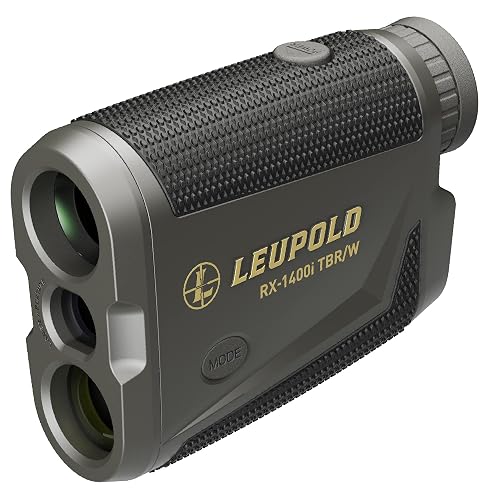
Rangefinder vs GPS golf is one of the most common questions golfers ask before buying a yardage tool, and the honest answer depends on how you play. A laser rangefinder wins for players who want exact distance to a specific flag, want to measure slope, and prefer a device that stays in their hand and never needs a map. A golf GPS wins for golfers who want course layout, hazard distances to the front, middle and back of greens, and a device that never needs to be aimed. Both tools are legal in most club rounds, but tournament rules and local events can differ, so check before you tee off.
Rangefinder vs GPS Golf at a Glance
| Criterion | Laser Rangefinder | Golf GPS |
|---|---|---|
| How it measures distance | Laser pulse to a targeted object | Satellite positioning against a preloaded course map |
| Best for | Exact distance to a flag, tree or bunker edge | Front, middle and back of green, hazard carries |
| Pin-specific distance | Yes, when aimed at the flag | Approximate, based on the green center |
| Slope measurement | Available on many models | Generally not offered |
| Course data needed | None | Course must be loaded or downloaded |
| Works in any location | Yes, anywhere you can see the target | Only on courses with mapped data |
| Ease of aiming | Requires a steady aim and a clear target | No aiming required |
| Battery use | Typically small coin-cell batteries | Rechargeable or battery-powered handheld or watch |
| Rules legality | Legal in most club play; slope may be restricted | Legal in most club play; check local and tournament rules |
Accuracy: Which Option Wins?
A laser rangefinder wins on pin accuracy. When you aim at the flag stick, the device returns the distance to that exact point, which is useful when the pin sits 8 to 12 yards behind the front edge of a deep green. Manufacturers typically specify accuracy within about one yard at moderate distances, though actual results depend on target reflectivity and how steady you hold the unit. Its weak spot is a target you cannot see clearly, such as a hidden flag in heavy rough or a tree line with no defined edge.
A golf GPS wins on consistency across the whole hole. Because it measures to mapped points on the green, it gives you front, center and back distances without any effort, and it stays accurate even when the flag is out of sight. The trade-off is that it rarely knows exactly where today’s pin is placed. Owners often report that the displayed yardage is a good guide but not a substitute for reading the pin position yourself.
Winner: Laser rangefinder for pin-specific accuracy. Golf GPS for overall hole consistency.
Speed of Use: Which Option Wins?
A golf GPS wins on speed. You glance at the screen, read the front, middle and back numbers, and you are ready. There is no aiming, no button pressing, and no need to find a target. On a crowded course with a group waiting behind you, that quick read matters.
A rangefinder takes a few seconds per shot: power on, lock onto the flag, read the number. Once you build a routine, it is quick, but it is still more steps than a GPS. Players who want to avoid fumbling with a device on the tee box often prefer the GPS for that reason.
Winner: Golf GPS for speed and simplicity.
Slope and Elevation: Which Option Wins?
A laser rangefinder wins here. Many models include a slope mode that measures the elevation change between you and the target and displays an adjusted distance. This matters when a green sits 15 to 20 feet above you, because the playing distance can differ noticeably from the flat distance. Slope features vary by model, and some rangefinders are restricted from using slope in tournament play, so check the rules for your event.
Golf GPS units generally show flat distances from course map data and do not measure elevation change on the fly. Some course maps include elevation information, but that is not the same as a live slope reading.
Winner: Laser rangefinder for slope and elevation.
Course Data and Setup: Which Option Wins?
A golf GPS wins on course information. Once it is set up, it gives you hazard distances, layout views and sometimes shot tracking. Setup usually means choosing your course from a list or downloading course data before you play. Owners often report that courses without current mapping can produce less useful results, so it helps to confirm your course is supported before a round.
A rangefinder needs no course data at all. You can use it on any range, any course, or even for hunting and property work. Setup is minimal: insert a fresh battery and learn the button layout. The rangefinder is also a good choice for practice rounds on courses you have not played before.
Winner: Golf GPS for course-aware features. Rangefinder for independence from course data.
Portability and Battery Life: Which Option Wins?
Both options are small enough to clip to a pocket or bag. A laser rangefinder is usually compact, with a single small battery that many owners replace after a season of regular play. Replacing the battery correctly matters, so check the model’s specified battery type before buying spares.
A golf GPS can be a handheld unit, a watch or an app on a phone. Watches and handhelds typically recharge, while phone apps draw on the phone battery, which can drain quickly during a long round in cold weather. Battery life figures vary by manufacturer, so read the spec sheet for your model.
Winner: Rangefinder for simplicity of battery care. Golf GPS for rechargeable convenience.
Rules and Tournament Use: Which Option Wins?
Both devices are generally allowed in casual and most club rounds. Rules for tournaments differ. Slope-measuring rangefinders are often prohibited in competitive play, while many GPS devices are permitted under standard rules. Some events have their own restrictions, so check with the event committee or your club before using either device in competition. This is a general guide, not official rules advice; consult your governing body if you are unsure.
Winner: Golf GPS for broader tournament acceptance, though rules vary by event.
Which Should You Choose?
- Choose a laser rangefinder if you want exact distance to the flag, slope measurement, and a device that works anywhere, including ranges and hunting.
- Choose a golf GPS if you want hazard distances, layout views, and quick reads without aiming, especially on courses you play often.
- Choose a rangefinder if you play in events where GPS is restricted or you want no dependence on course mapping.
- Choose a golf GPS if you walk the course and want distances to the front and back of the green at a glance.
- Choose both if you can, using the GPS for planning and the rangefinder for final pin distance.
Top Picks: Rangefinder and GPS Options
For a laser rangefinder with slope, the Bushnell Tour V6 Shift is a widely recognized option, and the Nikon COOLSHOT 20 is another popular model that many golfers consider. Both are commonly used for accurate pin distance.
For a golf GPS, the Garmin Approach G12 is a well-known handheld with course mapping, and the Bushnell Phantom 2 is a common choice for golfers who want a simple GPS unit.
If you want to read more before buying, Which Golf GPS Rangefinder App Is Right for You? Features and Setup Tips covers app-based options, and Bushnell Golf GPS Rangefinder: How to Choose and Use One (2026) walks through buying criteria in detail. For laser models, 5 Best Rangefinder Golfs with Slope Picks for Accurate Yardage (2026) compares slope-focused options, and Bushnell Tour V6 Golf Rangefinder: Setup, Use and Key Tips explains how to get the most from a popular laser model. Golfers comparing budget or mid-range laser units may also find Callaway Golf 300 Pro Laser Rangefinder Review: Features and Performance useful, and Mileseey GenePro G1 Touchscreen & GPS Rangefinder Review (2026) looks at a hybrid device that combines both approaches.
FAQ
Is a golf GPS more accurate than a rangefinder?
Not for pin distance. A laser rangefinder measures to the flag you aim at, so it gives the most precise number to the pin. A golf GPS measures to mapped points on the green and is better for front, middle and back distances across the hole.
Can I use a rangefinder in a golf tournament?
It depends on the event. Many tournaments allow rangefinders without slope features but restrict slope measurement. Check the rules with your event committee before competing.
Do golf GPS units work on any course?
Only on courses with mapped data. Most major courses are supported, but smaller or newer courses may not be. Confirm support before buying or before a round.
Which is better for beginners?
A golf GPS is often easier for beginners because it requires no aiming and shows multiple distances at once. A rangefinder suits beginners who want to learn pin distance and yardage judgment.
Can I use both together?
Yes. Many golfers use a GPS to plan the hole and a rangefinder for the final pin reading. Combining both gives you broad course context and precise final numbers.
Conclusion
The rangefinder vs GPS golf choice comes down to what you need most. A laser rangefinder delivers exact pin distance, slope measurement and independence from course data, which makes it the stronger tool for precision-focused golfers. A golf GPS delivers speed, hazard information and layout views without aiming, which suits golfers who want quick reads and course knowledge. Match the tool to your game, check your event’s rules, and consider using both if your budget and playing style allow.
Before you buy: helpful guides
About Owen Palmer
Owen Palmer is part of our editorial team and reviews and edits our hunting guides, checking product details against manufacturer specifications and owner feedback.