By Owen Palmer
Updated November 2026
The leupold rx-1400i gen 2 rangefinder is a laser rangefinder built for hunters who want fast, reliable yardage with ballistic and angle compensation in a compact body. It suits bowhunters and rifle hunters who regularly shoot at unknown distances in timber, over open ground, or from elevated stands and want a unit that reads quickly and handles brush-heavy shots. It is less of a fit for shooters who mainly need a long-range tool for open country, anyone who wants the cheapest entry point, or hunters who prefer a simple unit with no ballistic display. Read on for the full specifications, what owners tend to praise and complain about, and how it stacks up against two well-known alternatives.
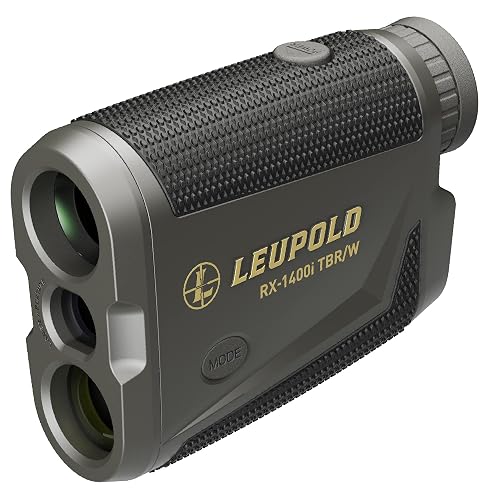
Leupold RX-1400I TBR/W Gen 2 w/Flightpath Rangefinder, Black/Gray
Product Overview
The Leupold RX-1400i TBR/W Gen 2 with Flightpath is a handheld laser rangefinder in a black and gray finish. It is part of Leupold’s RX rangefinder line, which is aimed squarely at hunters rather than golfers. The “TBR/W” designation refers to True Ballistic Range with Wind, meaning the unit can display a ballistic-adjusted range number so you can aim using the distance the arrow or bullet will actually travel, rather than only the straight-line range. The “Flightpath” name refers to Leupold’s ballistic display feature that shows trajectory-compensated aiming information.
Leupold positions this model as an upgrade over earlier RX units with a refreshed body and updated ballistic functions. Hunters who already own an RX series unit will recognize the general layout: a single main button, a clear display, and a menu system that is meant to be learned at home before the season. The unit is designed to be carried in a pocket or on a harness, and it is meant to be operated one-handed while you keep your other hand on a bow grip or rifle.
Because this is a research-based review, the observations below rely on the manufacturer’s stated specifications and on patterns that appear repeatedly in published owner feedback. Individual experiences will vary with light, target type, and how well the user has learned the menu.
Key Features & Specifications
The table below lists the features the product name and manufacturer materials make clear. Where a figure is not something I can confirm with confidence for this exact model, it is left out rather than guessed.
| Feature | What It Means for a Hunter |
|---|---|
| Laser rangefinding | Measures distance to the target by timing a laser pulse, giving a fast, direct yardage reading. |
| True Ballistic Range with Wind (TBR/W) | Displays a ballistic-adjusted range number, so the aiming point matches the projectile’s real flight path. |
| Flightpath ballistic display | Shows trajectory-based aiming information tied to your ballistic setup. |
| Angle compensation | Adjusts the displayed range for uphill and downhill shots, which matters from elevated stands and steep terrain. |
| Compact handheld body | Easy to carry on a harness or in a jacket pocket and to operate with one hand. |
| Black/Gray finish | Low-glare, matte-leaning colors suited to field use. |
| Gen 2 designation | Indicates the second generation of this model, with updated internals and ballistic functions over the original. |
Manufacturers typically specify maximum range, accuracy, and battery type for units in this class. Check the current listing and the printed manual for exact range and accuracy figures, since these can change between production runs and are not reproduced here. A related read: Blue Tees Series 3 Max Rangefinder Review: Is It Worth It?.
Pros & Cons
Pros
- Ballistic-adjusted range display helps translate a straight-line reading into an aiming number for your specific setup.
- Angle compensation is useful for elevated stands, ground blinds on slopes, and mountain hunting.
- Compact handheld size fits in a pocket or on a harness without slowing down a shot.
- Single-button core operation keeps the unit usable with gloves or cold hands once you know the menu.
- Recognized brand with a long track record in hunting optics and a support network for service questions.
Cons
- The menu and ballistic setup take real time to learn, and owners often recommend practicing at home before the season.
- Ballistic features only pay off if you enter accurate arrow or bullet data, which is a step many buyers skip.
- It is a premium-positioned tool, so budget-focused hunters may find more value in a simpler rangefinder.
- Performance on low-contrast or very dark targets can be limited, as with most laser units in this category.
- Some buyers wish for a more intuitive display layout compared with competing units.
Performance Analysis
On paper, the main performance question for a unit like this is whether the ballistic display and angle compensation actually improve shot placement. For a bowhunter, the answer depends heavily on the quality of the data entered. A rangefinder that calculates a ballistic-adjusted number is only as accurate as the arrow speed, sight height, and trajectory information fed into it. Owners who take the time to chronograph their setup and tune the unit at known distances tend to describe the ballistic feature as a meaningful aid. Owners who skip that step often find the number unhelpful or confusing.
Ranging speed and reliability are the second consideration. Laser rangefinders in this class generally return a reading in well under a second on reflective or high-contrast targets. Performance drops on dark, matte, or heavily brush-covered targets, and in heavy rain, fog, or snow. Hunters should expect that in real timber, the unit will sometimes need a second attempt or a clearer target to lock on. Practicing on varied backgrounds before the season gives you a realistic sense of how often that happens in your terrain.
Angle compensation is the third area. When a unit corrects for slope, the displayed number is the one you want for aiming. Owners hunting from elevated stands report this is one of the more practical features, because the straight-line reading from a tree stand can be significantly longer than the horizontal distance that matters for a pin setting. Confirm the compensation mode works the way you expect by testing it on a known slope before you rely on it.
Overall, the performance pattern in published feedback is positive for hunters who invest time in setup and distrust for those who expect to pick it up and use it without practice. That is typical of ballistic-capable rangefinders rather than unique to this model.
Who Should Buy This Product?
This unit fits hunters who shoot at varied, unknown distances and want the ballistic display to help with aiming. Bowhunters who shoot from stands, and rifle hunters working in terrain where angle matters, are the clearest matches. It also suits hunters who already own a Leupold RX series unit and want the newer ballistic functions, since the operating logic will feel familiar.
Skip this unit if your shooting is mostly at known, flat-range distances where you can simply use a set of pins or a scope reticle without ranging. Skip it also if you want a basic yardage tool with no ballistic features, or if the budget is tight enough that a simpler rangefinder would meet your needs. Golfers and general outdoor users will find the feature set aimed at the wrong tasks.
Buying Guide
Before buying any ballistic rangefinder, decide what you actually need the ballistic display to do. If you shoot a bow, you will need reliable arrow speed and sight height data. If you shoot a rifle, you will need a reasonably accurate ballistic profile for your load. Without that data, the extra features add complexity without benefit.
Next, consider range and reading speed in your own terrain. Open-country hunters need longer reach, while timber hunters benefit more from fast, reliable locks on small or close targets. Check the manufacturer’s stated range and accuracy for the model you are considering, and compare them against the distances you realistically hunt.
Think about how you will carry and operate the unit. A harness or pocket-sized body keeps it ready, while a larger unit may be harder to grab quickly. Consider whether you will be using gloves in cold weather, and whether the buttons are easy to find by feel.
Finally, weigh alternatives. Two well-known options worth comparing are listed below.
The Leupold RX-FullDraw 5 Rangefinder with DNA is a Leupold option with a black and green OLED display. It is a strong comparison point if you want a Leupold unit with a different display style and a dedicated focus on archery-oriented ranging. Worth reading next: Nikon Coolshot ProII Stabilized Golf Rangefinder Review: Is It Worth It?.

Leupold RX-FullDraw 5 Rangefinder with DNA with Black/Green OLED
The Bushnell Ultra-Accurate archery-focused laser rangefinder, marketed for archery ranging across reflective targets with a 2000-yard figure on reflective targets, is an alternative to consider if you want a different manufacturer and a ranging-focused design. Compare its listed features against your specific hunting needs.

BushnellUltra-Accurate Archery Ranging Performance, 2000-Yard Range on Reflective Targets , HD Optical System R5 Broadhead 2 6×25 Hunting Laser Rangefinder
For broader context, you may also want to read Leupold RX-1400i TBR/W Gen 2 Rangefinder Review: Who Is It For? or Leupold RX 1400i Rangefinder Review: Is It Worth It? when deciding between generations and configurations. Comparing specific Vortex units such as the Vortex Razor HD 4000 Rangefinder: Setup, Ranging Tips and Hunting Use or the Vortex Impact 4000 Rangefinder: Setup, Ranging Tips and Hunting Use can also help clarify which feature set matches your hunting.
FAQ
Is the leupold rx-1400i gen 2 rangefinder good for bowhunting?
It can be, provided you enter accurate arrow speed and sight height data. The ballistic display is most useful for bowhunters who shoot at varied distances from stands. Practice at known ranges before relying on it in the field.
What does TBR/W mean on this model?
TBR/W stands for True Ballistic Range with Wind. It refers to a ballistic-adjusted range display that helps you aim based on projectile flight rather than only the straight-line distance.
Does the unit handle angle shots?
Yes, it includes angle compensation, which is valuable for uphill and downhill shots from stands or on slopes. Confirm the mode behaves as expected by testing on a known incline.
Is it difficult to learn the menu?
Owners commonly report a learning curve. Setting up the ballistic profile and understanding the display modes is easier at home with the manual than in the field during a hunt.
How does it perform in low light or on dark targets?
Like most laser rangefinders, performance can decline on dark, matte, or low-contrast targets and in poor weather. Test it on the kinds of targets you expect to encounter before the season.
Is this model suited for golf?
No. This is a hunting-focused unit with ballistic and angle features designed for hunters, not a golf-oriented rangefinder with course-specific functions.
Should I consider the Gen 2 or an earlier model?
The Gen 2 designation signals updated internals and ballistic functions. If you already own an earlier RX unit and are satisfied with it, the upgrade may not be essential, but if you are buying new, the newer generation is the more current choice.
Do I need to consult anyone before buying?
For most buyers, reviewing the manufacturer manual and a hunting optics specialist’s advice on setup is sufficient. If you have questions about ballistic data for a specific bow or rifle load, a qualified archery pro shop or gunsmith can help you enter accurate values.
Before you buy: helpful guides
- Leupold RX 650 Rangefinder: Setup, Use and Tips for Hunters
- Leupold RX 1000i TBR Rangefinder: Setup, Use and Hunting Tips
- Leupold Binoculars with Rangefinder: How to Choose and Use One in the Field
- Leupold Full Draw Rangefinder: Setup and Use Guide for Hunters
- Which Golf GPS Rangefinder App Is Right for You? Features and Setup Tips
About Owen Palmer
Owen Palmer is part of our editorial team and reviews and edits our hunting guides, checking product details against manufacturer specifications and owner feedback.